
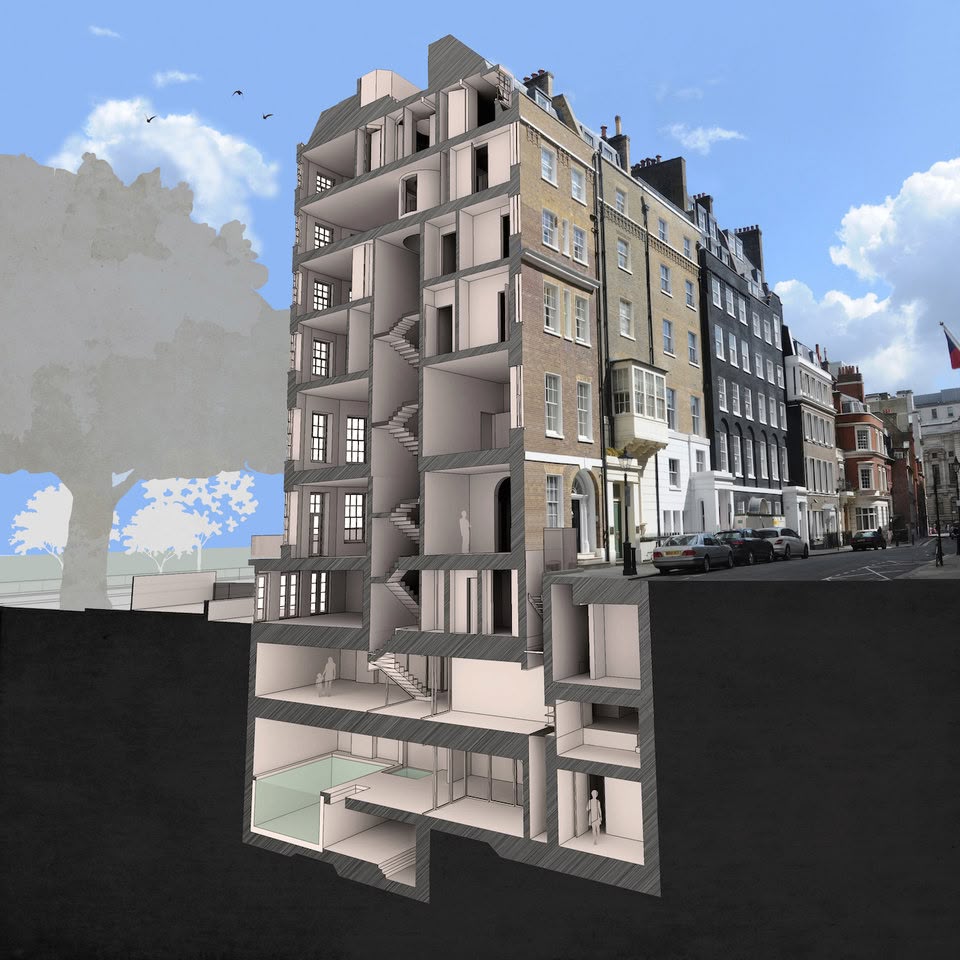
The iceberg house became a symbol of London's property excess. Unable to extend outward or upward, wealthy homeowners dug down, creating multi-level subterranean extensions beneath their Victorian and Edwardian properties. Swimming pools, cinemas, gyms, and wine cellars appeared beneath the streets of Kensington, Chelsea, and Hampstead. The trend spread to more modest properties as basement conversions offered a way to add valuable living space without planning battles over extensions.
Now, a decade into the basement boom, the failures are becoming apparent. Properties that cost hundreds of thousands to excavate are experiencing water ingress. Sophisticated waterproofing systems are failing years before their expected lifespan. Owners are discovering that the warranties they relied upon offer less protection than they assumed. Some basements have become unusable. Others require remediation costing as much as the original conversion.
This is not a problem confined to the super wealthy and their mega basements. Standard single storey basement conversions beneath Victorian terraces are experiencing similar issues. The same fundamental challenges affect basements regardless of size: keeping water out of spaces that exist below the water table, in London's clay soil, in a climate that delivers regular heavy rainfall.
This guide examines why basement waterproofing fails, what buyers and owners should know about basement risk, how to assess a basement conversion before purchasing, and what options exist when problems emerge.
Table of Contents
- The Basement Conversion Boom: How We Got Here
- Why Basements Are Fundamentally Different
- The Three Approaches to Basement Waterproofing
- Why Waterproofing Systems Fail
- The Warranty Problem: Protection That Is Not What It Seems
- London's Geology: Clay, Water, and Movement
- Iceberg Basements: When Ambition Exceeds Engineering
- Warning Signs of Basement Problems
- Assessing a Basement Before Purchase
- What to Do When Your Basement Is Failing
- The Insurance Challenge
- The Future of Basement Values
- FAQs
- Conclusion
1. The Basement Conversion Boom: How We Got Here
Understanding why basement conversions became so popular helps explain why so many are now experiencing problems. The boom was driven by specific London property market conditions that created intense demand for subterranean space.
The Space Constraint
London property prices rose relentlessly through the 2000s and 2010s. The value per square foot reached levels where adding space to a property justified almost any cost. At the same time, planning restrictions made conventional extensions increasingly difficult.
Conservation areas covering much of inner London restricted external alterations. Neighbours objected to rear extensions blocking light. Loft conversions reached practical limits. Side returns were already extended. For owners wanting more space, down became the only remaining direction.
The Victorian Cellar Opportunity
Many Victorian properties already had cellars: low ceiling spaces originally used for coal storage, wine storage, and household services. These spaces were never intended for habitation but offered a starting point for conversion.
Converting an existing cellar involved lowering the floor, underpinning walls, and installing waterproofing. The footprint already existed. Planning permission was often unnecessary or straightforward. The result was additional living space at a fraction of the cost of moving to a larger property.
The Full Excavation Trend
Where cellars did not exist, or where more space was desired, full excavation became increasingly common. Properties without any below ground space were dug out from scratch. Existing cellars were extended sideways and downward. Multi-level basements appeared beneath single houses.
The engineering became more ambitious. Swimming pools require significant structural provision. Cinemas need soundproofing and ventilation. Parking garages require vehicle access ramps. Each added complexity increased both cost and risk.
The Contractor Boom
Rising demand created a booming industry. Specialist basement contractors multiplied. Some were experienced civil engineers adapting to residential work. Others were builders expanding into unfamiliar territory. Quality varied enormously.
Competition drove prices and, potentially, corners cut. Warranty providers emerged offering guarantees that gave purchasers confidence. The industry developed its own standards and associations. But oversight was limited, and problems often took years to manifest.
The Current Reality
The basement boom peaked in the mid 2010s. Some boroughs introduced restrictions on basement size after complaints about construction disruption and concerns about structural and drainage impacts. The pandemic and subsequent economic uncertainty slowed new projects.
Meanwhile, basements completed during the boom years are aging. Waterproofing systems designed for 20 or 30 year lifespans are a decade or more into their service. The problems that were always statistically inevitable are beginning to appear. And owners are discovering that their assumptions about protection were optimistic.
2. Why Basements Are Fundamentally Different
Basements present waterproofing challenges that above ground construction does not face. Understanding these challenges explains why failure rates are significant despite substantial investment in waterproofing systems.
Below the Water Table
Much of London sits on clay soil with relatively high water tables. Depending on location, season, and recent rainfall, groundwater may be present at depths of two to four metres or even shallower. A basement extending below this level exists within groundwater, not above it.
This is fundamentally different from above ground construction. A wall above ground faces occasional rain that runs off or is absorbed and evaporates. A wall below the water table faces constant water pressure from soil saturated with groundwater. The water is always there, always pressing against the structure, always seeking any path inside.
The pressure increases with depth. A basement two metres below water table level faces significant hydrostatic pressure on walls and floor. This pressure acts on every square centimetre of the structure, finding and exploiting any weakness.
London Clay Behaviour
London clay has particular characteristics that affect basements.
Clay is relatively impermeable, meaning water does not drain through it quickly. After rainfall, water accumulates in clay soil and disperses slowly. Periods of heavy rain can significantly elevate water levels around basements, increasing pressure for extended periods.
Clay also moves. It shrinks when dry and swells when wet. This seasonal movement creates stress on basement structures. A basement that was stable when constructed may develop cracks as surrounding clay moves through annual cycles.
Trees near basements can intensify clay movement. Tree roots extract water from clay, causing localised shrinkage. When trees are removed or die, the clay rehydrates and swells. This can cause significant ground movement affecting nearby structures.
The Permanence Problem
Above ground waterproofing, such as roof coverings, can be inspected, maintained, and replaced. A flat roof can be re covered when its membrane fails. Flashing can be renewed. Defects can be identified and addressed.
Basement waterproofing is largely inaccessible once installed. External tanking is buried beneath soil. Structural waterproof concrete is the structure itself. Even cavity drain systems, which are theoretically maintainable, have components that cannot be easily accessed.
When basement waterproofing fails, diagnosis is difficult because the waterproofing cannot be directly examined. Repair may require excavation, internal strip out, or other major intervention. The consequences of failure are severe precisely because the waterproofing is so difficult to access.
3. The Three Approaches to Basement Waterproofing
Basement waterproofing uses three main approaches, sometimes in combination. Each has different characteristics, costs, and failure modes.
Type A: Tanking (Barrier Protection)
Tanking involves applying a waterproof barrier to basement walls and floor. The barrier prevents water reaching the internal space. If the barrier is intact, the basement stays dry. If the barrier fails at any point, water enters.
External tanking applies the barrier to the outside of the structure. This is theoretically preferable because water pressure pushes the barrier against the structure rather than away from it. However, external tanking requires excavation around the completed structure and is impossible for party walls shared with neighbours.
Internal tanking applies the barrier to the inside. Water pressure works against the barrier, trying to push it off the wall. Internal tanking systems must be mechanically fixed and must withstand hydrostatic pressure at all points.
Tanking is only as good as its weakest point. A pinhole defect can admit water. A failed junction between wall and floor can allow significant ingress. The entire barrier must be perfect and must remain perfect throughout its service life.
Type B: Structural Waterproofing
Structural waterproofing makes the basement structure itself waterproof. Typically this involves reinforced concrete designed and constructed to be watertight. The concrete mix, the thickness, the reinforcement, and the detailing of joints all contribute to water resistance.
Properly designed and constructed structural waterproofing can be highly effective. The structure and the waterproofing are the same element, so there is no barrier that can separate from the structure.
However, structural waterproofing is unforgiving of construction defects. Cracks, cold joints, inadequate concrete cover over reinforcement, and other construction issues can compromise water resistance. These defects may not be apparent immediately and may develop over time as the structure ages.
Structural waterproofing also cannot easily be repaired if it fails. The concrete is the waterproofing. If the concrete cracks and leaks, repair options are limited. Injection of cracks can address specific defects but does not restore the original design intent of a watertight structure.
Type C: Drained Protection (Cavity Drain Systems)
Cavity drain systems accept that water will penetrate the outer structure and manage it rather than excluding it. A membrane with moulded studs creates a cavity against walls and floor. Water entering through the structure drains down this cavity to a collection channel and is pumped away.
The principle is that water is managed rather than fought. If the outer wall leaks, the water goes into the drainage system rather than into the habitable space. The system tolerates imperfect structure and can cope with varying water pressures.
Cavity drain systems require active management. Water must be pumped out, requiring pumps, sumps, and power. Pumps fail. Power cuts occur. Drainage channels can block. The system requires maintenance throughout its life.
If the pump fails when water pressure is high, the basement floods. Backup pumps, battery backup power, and high water alarms provide redundancy, but no system is infallible. Cavity drain systems trade one set of risks (barrier failure) for another (active system failure).
Combined Approaches
Many basement waterproofing designs combine approaches: structural waterproof concrete as the primary barrier, external tanking where accessible, and a cavity drain system as belt and braces protection.
Combined approaches provide redundancy but also complexity. More components mean more potential failure points. The interaction between systems must be carefully designed. Responsibility for failure may be disputed when multiple systems and contractors are involved.
4. Why Waterproofing Systems Fail
No waterproofing system has a perfect record. All approaches have failure modes that can result in water entering basements. Understanding these failures helps owners assess risks and identify problems early.
Tanking Failures
Tanking systems fail when the barrier is breached. Causes include:
Construction defects allow water through from the start. Missed areas, inadequate thickness, poor preparation of substrates, and defective junctions between elements can all result in an imperfect barrier.
Movement cracking develops as the structure moves over time. Tanking membranes have limited capacity to stretch. Building settlement, clay shrinkage and swelling, thermal movement, and vibration from nearby traffic or construction can all cause cracking that propagates through the tanking.
Chemical degradation affects some tanking materials over time. Exposure to certain groundwater chemistry, soil gases, or other factors can deteriorate barrier materials.
Physical damage occurs during backfilling (for external tanking) or from fixings penetrating the barrier. A single nail through internal tanking can create a leak path.
Structural Waterproofing Failures
Structural waterproof concrete fails when it cracks or when construction defects create water paths.
Shrinkage cracking is inherent in concrete. As concrete cures and dries, it shrinks. This shrinkage can cause cracking, particularly where movement is restrained. While design should minimise shrinkage cracking, it cannot eliminate it entirely.
Construction joints where concrete pours meet are potential weak points. Water bars and other measures are designed to maintain continuity, but defects at joints are common.
Inadequate concrete quality, whether from incorrect mix design, poor placement, inadequate compaction, or insufficient curing, compromises water resistance.
Reinforcement corrosion can occur if concrete cover is inadequate or if aggressive groundwater reaches reinforcement. Corrosion causes expansion that cracks surrounding concrete.
Cavity Drain Failures
Cavity drain systems fail when water is not effectively managed.
Pump failure is the most common cause of cavity drain flooding. Pumps have finite lifespans. Mechanical failure, electrical failure, or power cuts can all result in pumps stopping while water continues to enter.
Blocked drainage occurs when silt, debris, or biological growth obstructs drainage channels or sumps. Water cannot reach pumps and builds up behind membranes.
Membrane failure, while less common than other failures, can occur. Membranes can be damaged during fit out works, can detach from walls, or can deteriorate over time.
System design defects, such as undersized pumps, inadequate sump capacity, or poor drainage falls, may mean the system cannot handle peak water ingress rates even when functioning.
Common Factors Across All Systems
Certain factors increase failure risk regardless of waterproofing type.
Poor design that does not adequately assess ground conditions, water table levels, and potential water pressure leads to systems not matched to actual conditions.
Poor construction quality, whether from inadequate supervision, cost cutting, or contractor inexperience, creates defects that may not be apparent for years.
Inadequate maintenance allows gradual deterioration. Pumps not serviced, drainage not checked, and warning systems not tested can result in avoidable failures.
Building works after completion can damage waterproofing. Fixings through membranes, penetrations for services, and alterations to drainage all create risks.
5. The Warranty Problem: Protection That Is Not What It Seems
Basement conversions typically come with warranties: documents promising protection if the waterproofing fails. These warranties provide confidence to buyers and owners. In many cases, that confidence is misplaced.
What Warranties Typically Cover
Basement waterproofing warranties typically promise to repair or pay for repair of waterproofing failures. They have defined terms, often 10, 20, or 25 years. They transfer to subsequent owners, which is important for property sales.
The existence of a warranty reassures buyers that they have protection. A transferable warranty from a recognised provider suggests the work was done to standards and that problems will be addressed.
The Exclusions and Limitations
Warranty documents contain exclusions that significantly limit coverage. Common exclusions include:
Failures caused by building movement, ground movement, or subsidence. This excludes problems caused by London clay behaviour, tree root effects, and structural settlement, which are primary causes of waterproofing failure.
Failures caused by lack of maintenance. If pumps have not been serviced according to requirements, drainage not checked, or other maintenance not performed, claims may be rejected. Documentation of maintenance is essential.
Failures caused by alterations or subsequent works. If any work has been done that affected the waterproofing, including apparently minor works, coverage may be voided.
Consequential losses. Most warranties cover only the cost of waterproofing repair, not damage to contents, alternative accommodation costs, or other consequences of failure.
The Claims Process
Making a successful warranty claim is often more difficult than owners expect.
Documentation requirements can be extensive. Owners must prove maintenance was performed, that no excluded factors apply, and that failure is within warranty scope.
Investigation to determine cause may be required before any claim is accepted. If the warranty provider's investigator finds an excluded cause contributed to failure, the claim may be rejected.
Dispute resolution processes may be slow. While an owner awaits claim determination, their basement may be flooded, unusable, or actively deteriorating.
Provider Solvency
Warranties are only valuable if the provider remains solvent and trading throughout the warranty period. A 25 year warranty from a company that ceases trading after 10 years provides no protection for the remaining 15 years.
The basement conversion industry has seen companies come and go. Providers that issued warranties during the boom years may not exist when claims arise years later. Some warranty schemes include insurance backing intended to address this risk, but the extent and reliability of such backing varies.
The Real World Experience
Stories of warranty claim failures are common. Owners facing significant repair bills discover their warranty does not cover their situation. Disputes over cause, maintenance history, and exclusions leave owners without the protection they believed they had.
This does not mean all warranties are worthless. Reputable providers do honour valid claims. But owners should understand warranties as limited risk mitigation rather than comprehensive protection. The existence of a warranty does not mean basement problems will be someone else's responsibility.
6. London's Geology: Clay, Water, and Movement
London's geological conditions create specific challenges for basements that differ from many other locations. Understanding these conditions helps explain why London basements experience particular problems.
London Clay
Much of London sits on London Clay, a dense clay layer deposited around 50 million years ago. This clay extends from near the surface down to depths of 50 metres or more in central areas.
London Clay has low permeability, meaning water moves through it very slowly. Rainfall that would drain quickly through sandy or gravelly soil sits in clay, percolating downward over weeks or months. Water tables in clay areas respond slowly to rainfall but remain elevated for extended periods after wet weather.
The clay also has high shrink swell potential. When clay dries (in summer, during droughts, or due to tree root water extraction), it shrinks. When it rewets, it swells. This volume change creates ground movement that affects any structures bearing on or surrounded by the clay.
Seasonal variation in clay volume creates annual cycles of movement. Structures must accommodate this movement or suffer damage. Basement walls surrounded by clay experience lateral pressure that varies seasonally and can cause cracking over time.
The Water Table
Water tables across London vary significantly by location, season, and longer term trends.
Historically, heavy extraction for industrial use lowered water tables substantially below natural levels. As industry declined and extraction reduced, water tables have been recovering. Parts of London have seen water tables rise significantly over recent decades.
Rising water tables increase pressure on basements designed when tables were lower. A basement that was above the water table when constructed may now be below it. This can cause problems even in basements that have been dry for many years.
Seasonal variation adds to the complexity. Water tables are typically higher in late winter and spring after winter rainfall, lower in late summer and autumn after summer evaporation. Basements that cope well in summer may experience problems during seasonal highs.
Tree Effects
Trees interact with clay in ways that significantly affect basements.
Tree roots extract water from surrounding soil. In clay, this causes localised shrinkage creating subsidence risk for nearby structures. Large trees can affect ground conditions at significant distances, sometimes exceeding the height of the tree.
When trees are removed, clay previously depleted by the tree rehydrates and swells. This heave can cause uplift of structures and increased lateral pressure on basement walls.
London's abundance of mature trees, often in close proximity to Victorian and Edwardian housing, creates particular challenges. Basement owners may have limited control over trees on neighbouring land that nonetheless affect their property.
Contaminated Land
London's industrial history has left contaminated land across many areas. Former gasworks, factories, tanneries, and other industrial sites may have soil contamination that affects basement construction.
Some contaminants attack waterproofing materials or concrete. Sulphates in groundwater can deteriorate concrete over time. Hydrocarbon contamination can degrade some membrane materials. Site specific contamination may require specialist design consideration.
7. Iceberg Basements: When Ambition Exceeds Engineering
The most dramatic basement failures have occurred in large scale, multi level excavations beneath high value properties. These iceberg basements, so called because more of the property is below ground than above, push engineering to its limits.
The Scale of Ambition
Iceberg basements in prime London locations can extend multiple storeys below ground. A typical Victorian house might have two storeys above ground; the basement beneath might add two, three, or even more levels below. Swimming pools, car lifts, staff accommodation, cinemas, gyms, and spa facilities appeared beneath the streets of Kensington, Chelsea, and Westminster.
Some projects extended beyond the original building footprint, creating tunnels beneath gardens or connecting to neighbouring properties. The engineering complexity of these projects rivalled commercial construction but was implemented beneath residential buildings on constrained sites.
Engineering Challenges
Multi level basements face compounding challenges.
Deeper excavation means higher water pressure. Each metre below water table level adds approximately 10 kN per square metre of pressure. A basement three metres below water table level faces substantial pressure on walls and floor.
Structural requirements increase with depth. Walls must resist greater earth and water pressures. Floors must resist uplift forces that try to push the basement up out of the ground. The structure becomes more substantial, more expensive, and more dependent on construction quality.
Impact on neighbouring properties becomes significant. Deep excavation affects ground conditions around the site. Party walls require complex underpinning. Neighbours' foundations may be affected. The risk of damage to surrounding properties increases with project scale.
Construction complexity multiplies problems. Large projects involve more contractors, more interfaces between elements, more opportunities for coordination failures. The project duration increases, exposing the site to more weather events and other risks.
Notable Failures
Several high profile iceberg basement failures have made news.
Properties where walls have cracked, where water ingress has made spaces unusable, and where remediation costs have exceeded the original construction costs have all been reported. Some properties have been in dispute for years, with owners, contractors, and warranty providers contesting responsibility.
The amounts involved can be staggering. Multi million pound basement projects that have failed may require multi million pound remediation. Some properties have become effectively unsaleable until problems are resolved.
The Regulatory Response
Concerns about iceberg basements led several boroughs to introduce restrictions.
Size limits now apply in areas including Kensington and Chelsea, Camden, and Westminster. Basements may be limited to single storey beneath existing building footprint. Planning policies explicitly address basement construction in ways they previously did not.
These restrictions came too late for basements already constructed. Properties completed during the peak boom years face the full risk profile that prompted subsequent regulation.
8. Warning Signs of Basement Problems
Identifying basement problems early can limit damage and reduce remediation costs. Understanding warning signs helps owners and buyers recognise issues before they become severe.
Visible Water
Any water where it should not be is an obvious warning sign. Water pooling on floors, water running down walls, or visible moisture on surfaces all indicate waterproofing failure.
The severity may vary with conditions. Problems that appear during heavy rain or when water tables are seasonally high may not be present at other times. Absence of water during a dry summer viewing does not mean absence of water in winter.
Water may appear gradually at first: a damp patch that expands, a slow trickle that becomes a steady flow. Early stage problems can accelerate quickly if conditions worsen.
Dampness and Humidity
Elevated humidity short of visible water can indicate problems. Basement spaces should be dry. Persistent dampness, condensation on surfaces, or a damp smell all suggest moisture entering or accumulating.
High humidity damages finishes, promotes mould growth, and creates uncomfortable conditions. Even without visible water, elevated moisture indicates the waterproofing is not performing as intended.
Mould and Musty Smells
Mould growth in basement spaces indicates persistent moisture. Mould in corners, behind furniture, or on walls suggests conditions exceeding what finishes can tolerate.
Musty or damp smells indicate moisture even when not visible. A basement that smells damp probably has elevated moisture somewhere, even if surfaces appear dry.
Staining and Tide Marks
Staining on walls or floors indicates past water presence. Tide marks showing water levels indicate significant ingress events. Even if currently dry, staining shows that water has entered and may enter again.
Efflorescence (white crystalline deposits) on concrete or masonry indicates water moving through the material and depositing dissolved salts. This demonstrates that water is or has been passing through the structure.
Pump Activity
In cavity drain systems, pump activity indicates water is being managed. Some water ingress is expected and is what the system is designed to handle.
However, pumps running frequently or continuously suggest significant water pressure. Pumps struggling to cope indicate either high water conditions or system limitations. Monitoring pump activity over time helps establish normal patterns and identify concerning changes.
Structural Issues
Cracks in basement walls or floors can indicate structural problems or can be water entry points, or both.
Horizontal cracks in walls suggest lateral pressure from surrounding ground. Vertical cracks may indicate settlement or shrinkage. Either can compromise waterproofing.
Floor lifting or cracking can indicate water pressure beneath the floor slab. In severe cases, hydrostatic pressure can lift floor slabs causing significant damage.
9. Assessing a Basement Before Purchase
Buying a property with a basement conversion requires particular diligence. The value a basement adds must be weighed against the risks it carries. Understanding how to assess basements helps buyers make informed decisions.
What Standard Surveys Reveal
Standard homebuyer surveys and building surveys have significant limitations for basements.
Surveyors conduct visual inspections from accessible areas. They cannot see behind finishes, within voids, or beneath floors. Waterproofing systems cannot be directly examined.
Survey reports note visible signs of problems (staining, dampness, mould) and may identify concerns about maintenance or condition. They typically recommend specialist investigation for basements, particularly where any concerns arise.
Surveyors cannot test pump systems under load or assess waterproofing performance. They report on what they can see and access, which in a finished basement is limited.
Specialist Basement Surveys
Specialist surveys focusing on basements provide more thorough assessment than standard surveys.
Specialists have expertise in basement construction methods and waterproofing systems. They understand what to look for and how to interpret findings.
Assessment may include: examining documentation (original design, construction records, warranties); inspecting sump and pump systems; checking drainage; measuring humidity levels; examining accessible components of waterproofing systems; and reviewing maintenance records.
Specialists can advise on whether the basement appears well constructed and maintained, what risks exist, and what further investigation might be warranted.
Documentation to Request
Buyers should request and review basement documentation.
Design and construction records show what waterproofing approach was used, who designed it, and who constructed it. Understanding the system helps assess reliability.
Building control sign off confirms the basement met regulatory requirements at completion. Absence of sign off is a serious concern.
Warranties should be examined carefully, including reading exclusions and understanding what is actually covered. Check whether maintenance requirements have been met.
Maintenance records demonstrate how the basement has been cared for. Regular pump servicing, drainage checks, and documented inspections suggest responsible ownership.
Questions to Ask
Questions for vendors and agents help reveal potential issues.
Has there ever been any water ingress or dampness? Honest sellers disclose known problems. Evasive answers warrant concern.
How frequently do pumps run? Normal patterns vary, but vendors should have some understanding of their system's behaviour.
What maintenance has been performed? Regular maintenance suggests attentive ownership. Absent or uncertain maintenance history suggests possible neglect.
Has any remedial work been required? Previous problems that were addressed may indicate ongoing vulnerability.
Are there any ongoing warranties, and are requirements being met? Checking warranty validity protects future coverage.
Risk Based Decision Making
The assessment goal is informed decision making, not necessarily avoiding all basements.
Some basements are well designed, well constructed, well maintained, and present acceptable risk. They add valuable space and may justify premium prices.
Some basements have warning signs suggesting elevated risk. These may be acceptable at adjusted prices reflecting potential costs, or may warrant walking away.
Some basements have clear problems requiring significant expenditure. Understanding remediation costs and ongoing risks is essential before committing.
10. What to Do When Your Basement Is Failing
Discovering that your basement waterproofing is failing is stressful and expensive. However, clear action can limit damage and address problems effectively.
Immediate Response to Water Ingress
Active water ingress requires immediate response to limit damage.
Remove contents from affected areas to prevent damage to belongings and to allow access for investigation and repair.
Identify where water is entering if possible. Understanding entry points helps determine what has failed.
If you have a cavity drain system, check that pumps are operating. Power failure, pump failure, or blocked drainage may be causing or exacerbating the problem.
Contact your warranty provider to notify them of the problem and understand claims procedures.
Document everything with photographs and written records. This documentation supports insurance claims, warranty claims, and any disputes.
Investigation and Diagnosis
Before remediation can be planned, the problem must be understood.
Specialist investigation determines what has failed, why, and what remediation is required. This may involve inspection of accessible components, testing of drainage systems, and potentially opening up finishes to examine concealed elements.
Understanding root cause is essential. Addressing symptoms without addressing causes results in recurring problems. If structural movement caused cracking that allowed water entry, fixing the immediate crack without addressing movement provides only temporary relief.
Multiple specialist opinions may be valuable for significant problems. Different specialists may have different views on causation and remediation. Understanding the range of professional opinions helps owners make informed decisions.
Remediation Options
Remediation approaches depend on what has failed and why.
For pump failures, replacement pumps, improved redundancy (backup pumps, battery power), and better maintenance regimes may address the immediate problem.
For drainage blockages, clearing and improving drainage systems may restore function. More fundamental drainage issues may require more significant intervention.
For tanking or membrane failures, repair options range from localised injection or patching to complete strip out and replacement. The appropriate approach depends on failure extent and cause.
For structural waterproof concrete failures, injection of cracks may address specific defects. More extensive structural problems may require internal lining systems or other major intervention.
Cost Realities
Basement remediation is expensive, often more expensive than owners expect.
Costs vary enormously depending on failure type, extent, and chosen remediation approach. Minor repairs might cost thousands. Major remediation can cost tens or hundreds of thousands for larger basements.
Remediation may require temporary relocation if the basement includes bedrooms or if work affects other parts of the property.
Indirect costs including contents damage, temporary accommodation, professional fees, and loss of basement use during works add to direct remediation costs.
11. The Insurance Challenge
Insurance coverage for basement problems is complex and often disappointing for owners expecting protection.
What Standard Buildings Insurance Covers
Standard buildings insurance typically covers sudden and unforeseen damage from insured perils: storms, floods (if included), escape of water from pipes, and similar events.
Insurance generally does not cover gradual deterioration, maintenance failures, or inherent defects. These exclusions significantly limit coverage for many basement problems.
A basement that floods because a pipe burst may be covered. A basement that floods because the waterproofing gradually failed over years is unlikely to be covered under standard buildings insurance.
The Maintenance Exclusion
Insurers expect owners to maintain their properties. Failures attributable to poor maintenance, including failures of pumps that were not serviced or drainage that was not checked, may not be covered.
Documentation of maintenance is essential for potential claims. Without records demonstrating that maintenance was performed, insurers may reject claims on maintenance grounds.
The Inherent Defect Exclusion
Defects in design or construction, present from the beginning but not immediately apparent, are typically excluded from standard buildings insurance. This exclusion often applies to basement waterproofing failures.
If a waterproofing system was defective from construction, the defect is inherent even if it took years to manifest. Standard insurance does not cover correction of construction defects.
Specialist Basement Cover
Some insurers offer specialist basement cover or endorsements specifically covering basement waterproofing failures. This cover typically costs more and may have specific requirements around maintenance and monitoring.
Owners of basement properties should review their insurance carefully to understand what is and is not covered. Adding specialist cover, where available, may be prudent for high value basements.
The Warranty and Insurance Interaction
Where warranties exist, insurers may expect warranty claims to be pursued first. Where warranties do not apply or have been exhausted, insurance might be relevant for remaining losses.
Understanding how warranty and insurance coverage interact helps owners navigate claims effectively. Professional advice may be valuable for significant claims involving both warranty and insurance.
12. The Future of Basement Values
The experience of basement failures is beginning to affect how the market values basement space. Understanding trends helps buyers and owners make informed decisions.
Buyer Awareness
Buyers are becoming more aware of basement risks. Stories of failures, the experience of friends and acquaintances, and professional advice from surveyors and solicitors all contribute to greater caution.
This awareness means basements face more scrutiny during purchase. Buyers ask more questions, request more documentation, and commission more thorough investigations than previously.
Properties with concerning basement histories or lacking documentation face resistance from informed buyers. Problems that might have been overlooked during the boom years now receive attention.
Valuation Impact
The value premium for basement space may be decreasing in some areas as risk awareness grows.
Basements that are clearly well maintained with comprehensive documentation may still command premiums. Basements with uncertain histories or visible concerns may face discounts.
Valuers are more likely to note basement risks and recommend investigations than previously. Mortgage lenders may require additional information or impose conditions for properties with basements.
The Maintenance Imperative
Basements require active maintenance throughout their life. Pumps need servicing. Drainage needs checking. Monitoring systems need attention.
Owners who neglect maintenance face both increased failure risk and reduced saleability. The documentation of maintenance becomes part of the property's value.
Future buyers will want to see maintenance records. Absence of records suggests possible neglect and creates uncertainty that affects value.
Long Term Outlook
Basements will remain valuable as a source of additional space in constrained urban environments. Well designed, well constructed, and well maintained basements provide genuine utility.
However, the era of basement space being valued without question is ending. Due diligence, documentation, and maintenance will increasingly differentiate basements that hold value from those that become liabilities.
13. FAQs
I am buying a property with a basement conversion. Should I be worried?
Not necessarily worried, but appropriately cautious. Basements can be excellent additions to properties when well done. Commission specialist survey beyond standard homebuyer assessment. Review all documentation carefully. Understand the waterproofing system and maintenance requirements. Make risk based decisions: some basements are solid investments, some are significant risks.
My basement has a 25 year warranty. Does this mean I am protected?
Partially, but less than you might assume. Read the warranty carefully, including all exclusions. Common exclusions include ground movement, lack of maintenance, and subsequent alterations. Warranties require maintenance compliance, which you must document. The warranty provider must remain solvent for the warranty to be honoured. A warranty provides some protection but is not a guarantee against problems.
How often should basement pump systems be serviced?
Most manufacturers recommend annual servicing. This typically includes pump testing, cleaning, checking electrical connections, and verifying alarms function. Additionally, quarterly visual checks of sumps and drainage are prudent. Document all servicing for warranty compliance and future sale.
What should I do if I notice dampness in my basement but no obvious water?
Take it seriously. Dampness may be early stage water ingress or may indicate humidity problems. Investigate promptly: check pump operation, drainage function, and look for any visible water entry. Consider environmental monitors to track humidity trends. If dampness persists, commission specialist investigation before problems worsen.
Can basement waterproofing be upgraded or improved after construction?
Yes, various retrofit options exist. Cavity drain systems can be installed within existing basements, providing drainage protection regardless of the original waterproofing condition. Injection and sealing can address specific crack or defect issues. The appropriate approach depends on current condition, failure modes, and budget. Specialist assessment helps determine suitable options.
Are basement problems always expensive to fix?
Not always. Minor issues like pump replacement or drainage clearing may cost hundreds to low thousands. However, more fundamental problems can cost tens of thousands or more. The uncertainty about costs until investigation is complete is part of what makes basement problems stressful. Early investigation typically leads to less expensive remediation than allowing problems to develop.
How do basement problems affect ability to sell a property?
Known problems must be disclosed to buyers. Properties with unresolved basement issues are harder to sell and typically sell at discounts reflecting remediation costs plus uncertainty premiums. Properties with documented resolved problems may sell more easily than those with uncertain condition. Good documentation of maintenance and any remediation work supports sales.
14. Conclusion
London's basement boom added millions of square feet of living space beneath the city's streets. For many owners, these basements have performed well, providing valuable accommodation that justified significant investment. For others, basement ownership has become a source of ongoing problems, expense, and stress.
The fundamental challenge of keeping water out of below ground spaces in a wet climate over clay soil ensures that some basements will always experience problems. The most sophisticated waterproofing systems can fail. The most expensive construction can develop defects. The most comprehensive warranties can prove less protective than owners expected.
This reality does not mean basements are bad investments. It means they are investments that require understanding, diligence, and ongoing attention. The decision to buy or retain a basement property should be made with clear eyes about the risks involved.
For buyers, this means thorough investigation before purchase, careful review of documentation, and realistic assessment of warranties and their limitations. It means budgeting for ongoing maintenance and potential remediation. It means choosing properties where basements were well designed, well constructed, and well maintained over those where any of these elements are uncertain.
For current owners, this means taking maintenance seriously. Pump servicing, drainage checks, humidity monitoring, and documented attention to basement condition protect both the property and its value. Early identification of problems allows intervention before major damage occurs.
For those experiencing problems, this means prompt investigation, clear understanding of what has failed, and informed decisions about remediation. It means pursuing warranty claims where applicable while understanding their limitations. It means realistic budgeting for costs that can be substantial.
Henderson Wood provides specialist damp surveys for basement properties across London. Our surveys assess basement condition, evaluate waterproofing systems, and identify concerns that warrant attention. Whether you are considering purchasing a property with a basement, want assessment of your existing basement, or are experiencing problems that need diagnosis, professional evaluation provides the foundation for informed decisions.
Basements can be assets or liabilities. Understanding which category yours falls into is the first step to protecting your investment.