
Your Victorian house has survived for over a century. It weathered two world wars, multiple recessions, and countless changes in fashion and technology. Yet somehow it cannot cope with you taking a shower without developing mould in the bedroom. What is going wrong?
The answer lies in a fundamental mismatch between how Victorian buildings were designed to work and how we live in them today. These properties were built for a world of open fires, servants, and a tolerance for draughts that modern occupants would find unacceptable. We have sealed them, insulated them, and filled them with moisture generating activities while removing the ventilation systems they depended upon. The result is condensation problems that the original builders never anticipated because they never would have occurred under Victorian living conditions.
This is not a criticism of Victorian construction. These buildings have proven remarkably durable and adaptable. But understanding why they struggle with condensation helps you address problems effectively rather than fighting against the building's nature. This guide explains the science behind Victorian condensation problems, why modern modifications often make things worse, and how to achieve comfortable, dry living without abandoning the character that makes these properties so desirable.
Table of Contents
- How Victorian Houses Were Designed to Breathe
- The Ventilation System You Removed Without Realising
- Why Solid Walls Create Condensation Problems
- The Double Glazing Paradox
- Central Heating: Part of the Solution, Part of the Problem
- Modern Living in Victorian Spaces
- The Converted Flat Challenge
- Where Condensation Concentrates in Victorian Properties
- The Mould That Follows
- Diagnosing Your Condensation Problem
- Solutions That Work With Your Building
- When Professional Assessment Is Needed
- FAQs
- Conclusion
1. How Victorian Houses Were Designed to Breathe
Victorian builders did not think about buildings the way modern architects do. They were not trying to create airtight, thermally efficient envelopes. They were working with materials that breathe, accepting that air would move through their buildings, and designing for the living patterns of their era. Understanding this original design intent explains why Victorian houses behave as they do.
The Breathable Construction Philosophy
Victorian construction used materials that allow moisture to pass through them. Brick, lime mortar, lime plaster, and lime wash all permit water vapour to move in and out of the building fabric. This is often called "breathable" construction, though a more accurate term might be "vapour permeable."
This permeability served a purpose. Moisture generated inside the building could escape through walls as well as through ventilation. Moisture entering from outside could evaporate back out when conditions allowed. The building fabric acted as a buffer, absorbing moisture when levels were high and releasing it when levels dropped.
Solid brick walls, typically 225mm (nine inches) thick for a typical terraced house, have significant thermal mass. They warm slowly and cool slowly. Once warm, they stay warm for extended periods. Once cold, they resist warming. This thermal mass affects how the building responds to heating and how condensation behaves on wall surfaces.
Original Features Supporting Airflow
Victorian houses incorporated numerous features that promoted air movement, many of which have been removed or blocked in modern renovations.
Open fireplaces in most rooms created continuous air movement. Even when not lit, the chimney drew air upward through natural convection. When lit, the draw increased dramatically. A typical Victorian house with fireplaces in several rooms had substantial air changes per hour just from chimney effect.
High ceilings, typically 2.7 to 3 metres or more, created volume for air to circulate. Warm air rising to ceiling height left cooler air at occupant level, but also created space for moisture laden air to accumulate above head height where it caused less immediate discomfort.
Sash windows were designed for controllable ventilation. Opening the top sash alone allows warm moist air to escape at high level while drawing cooler fresh air through gaps at the bottom. The traditional practice of leaving sashes slightly open, even in winter, maintained continuous ventilation.
Suspended timber ground floors with airbricks in external walls created ventilated voids beneath the floor. Air moving through this void kept floor timbers dry and contributed to overall building ventilation.
Gaps and draughts, while uncomfortable, provided adventitious ventilation that supplemented deliberate openings. Gaps around windows and doors, between floorboards, around skirting boards, and through countless other imperfections allowed air movement throughout the building.
Why This System Worked
Victorian living conditions supported this ventilation intensive approach. Heating came from burning fuel in open fireplaces: coal in most homes, wood in some. This combustion consumed oxygen and created the strong upward draw that drove ventilation.
Occupancy patterns differed from today. Houses had servants who managed fires, opened windows, and maintained airflow as part of daily routines. Reception rooms were heated when in use. Bedrooms were often unheated. Different expectations of comfort meant tolerance for cooler temperatures and more air movement.
Moisture generation was lower than in modern homes. Bathing was infrequent by current standards. Clothes were washed less often and dried outdoors or in purpose built laundry spaces. Cooking involved open fires and ranges that vented combustion products up chimneys.
The combination of high ventilation rates, lower moisture generation, and continuous air movement through open fires meant that moisture levels rarely built up to problematic levels. The breathable construction and ventilation systems were adequate for Victorian life.
2. The Ventilation System You Removed Without Realising
Modern renovation of Victorian properties systematically removes the ventilation features the buildings relied upon. Each modification makes sense in isolation, aiming to improve comfort, reduce heat loss, or update the property for contemporary use. Collectively, they can create severe condensation problems.
Blocked Fireplaces
Most Victorian fireplaces are now blocked or removed. Central heating provides more convenient warmth without the mess, effort, and inefficiency of open fires. Many fireplaces have been boarded over, plastered across, or completely removed with chimney breasts taken out.
Blocking a fireplace eliminates the ventilation it provided. Even with a room sealed register allowing some airflow, the powerful draw of an open chimney disappears. A house that once had four or five active flues providing continuous ventilation now has none.
The impact is dramatic. Homes that previously had several air changes per hour from chimney effect alone now rely entirely on occupant behaviour (opening windows) and any remaining adventitious ventilation. Most occupants open windows far less than the continuous ventilation open fires provided.
Sealed Windows
Original sash windows had gaps. The sliding mechanism, the meeting rails between upper and lower sashes, and the frames themselves all allowed air infiltration. These gaps were draughts, but they were also ventilation.
Draught stripping sash windows eliminates this infiltration. Replacement windows, whether double glazed sashes or modern casements, are designed to be airtight when closed. This is a deliberate improvement from an energy efficiency perspective, but it removes another ventilation pathway.
The combination of blocked fireplaces and sealed windows can reduce air change rates from several per hour to less than 0.5 per hour. Moisture generated in the building has nowhere to go and accumulates until it condenses.
Blocked Airbricks
Airbricks providing underfloor ventilation are frequently blocked, either deliberately to reduce draughts or accidentally when external ground levels rise or surfaces are paved over. Sometimes airbricks are removed or covered during external work without understanding their purpose.
Blocking airbricks eliminates ventilation beneath suspended floors. Moisture from the ground accumulates in the underfloor void, raising humidity and potentially causing timber decay. It also removes a contribution to overall building ventilation.
Sealed Floors
Victorian houses had floorboards with gaps between them. These gaps allowed air to circulate between ground floor rooms and the ventilated void beneath. Modern renovation often involves sanding and sealing floorboards, laying carpet with underlay, or installing laminate or engineered flooring over the original boards.
Each of these treatments seals the floor more completely than the original construction. Air exchange between living spaces and the underfloor void is reduced or eliminated. Combined with blocked airbricks, this creates a sealed void that can develop serious moisture and decay problems while contributing nothing to ventilation above.
The Cumulative Effect
Any one of these modifications has limited impact. A house with sealed windows but working fireplaces still has adequate ventilation. A house with blocked fireplaces but original draughty sash windows may cope. But a house with blocked fireplaces, sealed replacement windows, blocked airbricks, and sealed floors has lost virtually all its original ventilation.
This is the situation in many renovated Victorian properties. Well meaning modernisation has created beautiful, draught free homes that cannot cope with the moisture generated by contemporary living.
3. Why Solid Walls Create Condensation Problems
The solid masonry walls typical of Victorian construction have thermal properties that make them particularly prone to condensation problems in modern use. Understanding how these walls behave thermally explains why condensation concentrates where it does.
Cold Inner Surfaces
Solid brick walls have no insulation. Heat passes through them relatively freely from inside to outside. In cold weather, the inner surface of an external wall is significantly colder than the room air temperature.
How cold depends on several factors: wall thickness, external temperature, internal heating level, and wind exposure. A typical 225mm solid wall might have an inner surface temperature 5 to 10 degrees celsius colder than the room air on a cold winter day. Thinner walls or exposed corners will be colder still.
When warm moist air contacts this cold surface, it cools. If the surface is cold enough, the air cools below its dew point: the temperature at which it can no longer hold all its moisture. The excess moisture condenses as liquid water on the wall surface.
Thermal Bridging at Corners and Junctions
Where two external walls meet at a corner, heat escapes through two surfaces rather than one. The corner has a greater ratio of cold external surface to internal volume than flat wall areas. This makes corners significantly colder than adjacent flat walls.
Similar thermal bridging occurs at junctions between walls and floors, walls and ceilings, around window openings, and wherever changes in construction create concentrated heat loss paths. These locations can be 10 to 15 degrees colder than the general wall surface.
These cold spots are prime condensation locations. The air temperature at which condensation occurs is called the dew point. A surface must be at or below the dew point for condensation to form. Thermal bridges reach dew point at indoor humidity levels that would not cause condensation on warmer surfaces.
This is why condensation often concentrates in corners, around windows, and at ceiling level in corners. These are the coldest spots in the room, where surfaces first reach dew point as humidity rises.
The Thermal Mass Factor
Solid walls have high thermal mass: they absorb and store significant amounts of heat. This creates a time lag between when you heat the room and when the wall surface warms.
When you turn heating on in the morning, the room air warms relatively quickly. The wall surface warms much more slowly, potentially remaining cold for hours after the air has warmed. During this lag period, warm moist air is in contact with cold wall surfaces. Condensation risk is highest during these warm up periods.
Similarly, when heating goes off at night, the wall retains warmth longer than the air. But as the building cools overnight, walls eventually reach temperatures where condensation occurs.
Intermittent heating, which most households use, creates repeated cycles of condensation risk as walls warm and cool out of phase with air temperatures. Continuous low level heating maintains warmer wall surfaces but costs more to run.
Why Insulation Helps (When Done Right)
Internal wall insulation raises the temperature of the inner surface by placing insulating material between the cold masonry and the room. The room side of the insulation stays warmer because less heat passes through to the cold wall behind.
This reduces condensation on the visible wall surface. However, it creates risks if installed incorrectly. The masonry behind the insulation becomes colder than before, because it no longer receives heat from inside. If moisture reaches this cold masonry, either from inside or outside, it cannot dry. Hidden condensation within the wall can cause serious damage.
Successful internal insulation of solid walls requires careful attention to vapour barriers, detailing at junctions, and ensuring the wall can still manage any moisture that does reach it. DIY or poorly specified insulation can make problems worse rather than better.
4. The Double Glazing Paradox
Double glazing is one of the most popular improvements to Victorian properties. It reduces heat loss, improves comfort, reduces noise, and can improve security. It can also contribute to condensation problems, a paradox that confuses many homeowners.
How Double Glazing Changes Condensation Patterns
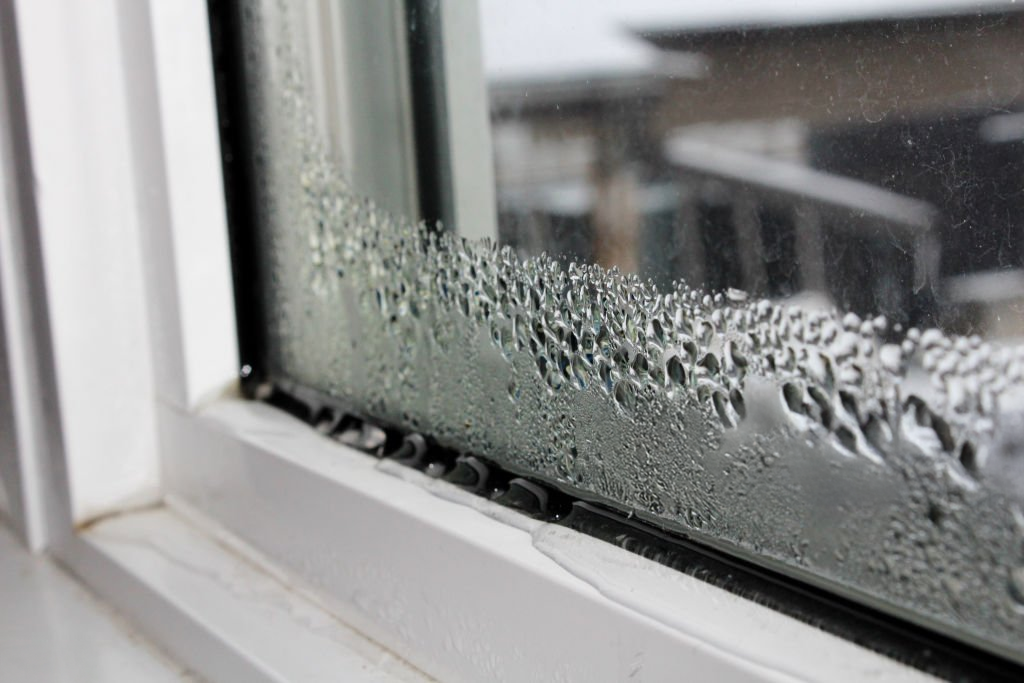
Single glazed windows are the coldest surfaces in most rooms. On a cold winter night, single glazing might be at 5 degrees or lower while walls are at 12 to 15 degrees. Condensation forms on the glass first, running down to puddle on the sill. This visible condensation on windows is unpleasant but actually serves as a warning sign: humidity in the room is too high.
Double glazing raises the temperature of the glass surface. Instead of 5 degrees, the inner pane might be at 12 to 15 degrees or warmer with good quality units. This is warm enough that condensation no longer forms on the glass at normal humidity levels.
But the moisture has not disappeared. If the room humidity remains high, that moisture will condense somewhere. With double glazing, the coldest surface is no longer the windows. It is now the walls, particularly corners and areas near windows where thermal bridging occurs.
Homeowners who install double glazing sometimes find that their window condensation problem becomes a wall mould problem. The moisture that used to condense on glass, where it was visible and easily wiped away, now condenses on walls, where it is less obvious and supports mould growth.
The Ventilation Reduction Effect
Original windows in Victorian properties were not airtight. Gaps around frames, sliding mechanisms, and between sashes allowed air infiltration. This was inefficient for heating but provided ventilation.
Replacement double glazing is designed to be airtight. Modern windows with compression seals allow minimal infiltration when closed. This is a deliberate improvement from an energy and comfort perspective, but it removes a significant ventilation pathway.
Installing double glazing in a Victorian property can reduce the air change rate substantially. If the property has already lost ventilation from blocked fireplaces, double glazing may be the change that tips it into serious condensation problems.
Trickle Vents: The Partial Solution
Building regulations generally require that replacement windows include trickle vents: small openable vents, usually in the frame, that allow background ventilation even when windows are closed.
Trickle vents help but rarely provide ventilation equivalent to the gaps in original windows. Many occupants close them anyway, not understanding their purpose. And regulations requiring trickle vents are relatively recent; older double glazing installations may lack them entirely.
The Sensible Approach
Double glazing remains beneficial in Victorian properties when combined with adequate ventilation provision. The reduced heat loss means rooms can be warmer with less energy. But that benefit is only realised if ventilation is maintained.
Installing double glazing should prompt a review of overall ventilation. If fireplaces are blocked and no mechanical ventilation exists, adding extract fans to kitchens and bathrooms, installing a positive input ventilation system, or ensuring trickle vents are present and left open may be necessary to avoid trading window condensation for wall problems.
5. Central Heating: Part of the Solution, Part of the Problem
Central heating transformed how we live in Victorian houses. Rooms that were once barely used in winter because they could not be economically heated are now part of everyday living space. Comfort levels have increased dramatically. But central heating also changes moisture dynamics in ways that can contribute to condensation problems.
How Heating Helps
Heating raises air temperature, and warmer air can hold more moisture. This means that at higher temperatures, the same amount of water vapour in the air represents a lower relative humidity. Heating a room reduces relative humidity, making condensation less likely.
Heating also warms surfaces, raising wall temperatures above dew point. A well heated room with warm walls experiences less condensation than a cold room with the same absolute moisture content.
These effects are why heating is part of the standard advice for preventing condensation. Keep your home warm and you reduce condensation risk. This is broadly true, but the relationship is more complex than it first appears.
How Heating Patterns Matter
The timing and pattern of heating affects condensation as much as overall temperature.
Continuous low level heating keeps walls consistently warm. The thermal mass of solid walls never cools to dew point temperatures. Condensation risk is minimised throughout the day and night.
Intermittent heating creates cycles of risk. When heating first comes on, air warms quickly but walls warm slowly. For a period, warm moist air is in contact with cold walls. As heating cycles off overnight, walls cool and may reach dew point in the early hours of the morning.
Many households heat intensively when occupied but allow temperatures to drop significantly at night and when out. This saves energy but maximises condensation cycles. The most condensation prone periods are early morning when heating first comes on and overnight as the building cools.
The Bedroom Heating Problem
Victorian houses often had no heating in bedrooms. These rooms were cold sleeping spaces where fires were lit only during illness. Modern occupants expect bedrooms to be comfortable.
But many households still do not heat bedrooms consistently. Radiators may be turned off or set low. Bedroom doors may be closed, isolating them from heating in other parts of the house. The result is bedrooms that are colder than living spaces.
This matters because bedrooms receive significant moisture input during occupied hours. A sleeping adult releases 200 to 300ml of water vapour overnight through breathing and perspiration. A couple releases more than half a litre. In a cold bedroom with poor ventilation, this moisture has nowhere to go and condenses on cold surfaces.
Bedroom condensation and mould, often appearing around windows, in corners, and behind beds against external walls, is one of the most common complaints in Victorian properties. It results from the combination of moisture generation during sleep and inadequate heating and ventilation.
The Unheated Room Problem
Victorian houses have more rooms than modern homes of similar value. Spare bedrooms, box rooms, studies, and other spaces may receive little or no heating.
These unheated rooms become cold spots in the building. Moisture migrating from heated spaces condenses when it reaches cold room surfaces. A spare room with the door usually closed and the radiator off may develop severe condensation and mould even though no moisture generating activities occur there.
The solution is not necessarily to heat these rooms fully, but to maintain some minimum temperature and ensure they are ventilated so moisture does not accumulate. A room kept at 15 degrees with a trickle vent open will have fewer problems than a room left unheated with the door and windows closed.
6. Modern Living in Victorian Spaces
We generate far more moisture in our homes than the Victorians did. Changes in bathing, cooking, laundry, and even breathing patterns mean that a Victorian house occupied by a modern family receives a moisture load it was never designed to handle.
Bathroom Moisture
Victorian bathing was infrequent by current standards. Weekly baths were typical for most people, and showers were rare. Bathrooms in Victorian houses were often later additions or converted spaces.
Modern households may include multiple people who shower daily. A single shower releases 200ml or more of water vapour into the air. Hot showers release more than warm ones. Power showers and long showers release more still.
A family of four showering daily can add nearly a litre of water to the indoor air just from bathing. Victorian ventilation systems were not designed for this load. Without effective extraction, bathroom moisture migrates through the property, condensing on cold surfaces in bedrooms and other rooms.
Kitchen Moisture
Victorian cooking centred on ranges and stoves that vented directly up chimneys. Combustion products, steam, and cooking odours all left the building through the flue. Modern cooking on hobs and ovens has no such direct extraction.
Boiling water, simmering food, steaming vegetables, and using the dishwasher all release substantial moisture. Cooking a meal can add half a litre of water to kitchen air. Without effective extraction, this moisture spreads through the property.
Extractor hoods and fans are standard in modern kitchens but are often inadequate or not used consistently. An extractor that vents to the outside removes moisture from the building. An extractor that recirculates (filters air and returns it to the room) does not remove moisture at all.
Laundry Moisture
The Victorians did not dry washing indoors. Laundry was done by hand or by servants and dried outdoors on lines or in purpose built drying spaces. The idea of drying clothes on a radiator or an indoor airer would have seemed bizarre.
Modern households frequently dry clothes indoors, particularly in London where outdoor space is limited and British weather makes outdoor drying unreliable. A single load of washing contains roughly five litres of water. All of that water evaporates into indoor air if dried inside.
Drying a load of washing indoors every day or two adds more moisture to a Victorian house than all other activities combined. In a property with compromised ventilation, this moisture loading virtually guarantees condensation problems.
Condenser dryers help by collecting water rather than releasing it as steam. Vented dryers extract moisture to outside if properly installed. But many households still dry clothes on racks and radiators, adding enormous moisture loads to buildings not designed to cope.
Occupancy and Breathing
Simply being present in a building generates moisture. Breathing releases water vapour: roughly 40ml per hour per person at rest, more during activity. A family at home in the evening releases significant moisture just by existing.
Victorian houses often had lower occupancy density relative to their size, particularly when servant spaces are included. Staff areas, nurseries, and formal rooms meant families spread through more space. Modern occupancy concentrates in fewer rooms, increasing local moisture generation.
The trend toward working from home has increased how much time people spend in their properties. Rooms that were previously empty all day now have occupants generating moisture throughout working hours.
7. The Converted Flat Challenge
A significant proportion of London's Victorian housing stock has been converted into flats. These conversions create specific condensation challenges beyond those affecting whole houses.
Compromised Ventilation Design
A Victorian terraced house had a coherent ventilation system: fireplaces in each room connected to chimney stacks, sash windows on front and rear elevations, suspended floors with through ventilation. Converting that house into multiple flats disrupts this system.
Individual flats typically lose access to some chimney flues. Cross ventilation through front to rear is interrupted by party walls between flats. Shared hallways and staircases become circulation spaces rather than ventilated rooms.
Each flat ends up with a fragment of the original ventilation system. A ground floor rear flat might have access to a kitchen chimney but no through ventilation. A top floor flat might have no fireplaces at all if the chimney breast was removed on lower floors.
Internal Spaces Without External Walls
Conversion often creates internal rooms that have no external walls at all. Bathrooms carved from larger rooms, bedrooms in the middle of the floor plate, and kitchens positioned centrally may have no windows.
These internal spaces depend entirely on mechanical ventilation. Without external walls, they have no path for natural air exchange. Extract fans become essential rather than supplementary. Yet many conversions have inadequate mechanical ventilation provision, particularly older conversions done before current building regulations.
An internal bathroom with a weak extract fan in a poorly ventilated flat is a recipe for severe mould problems. Moisture generated during bathing has no escape route and condenses on whatever cold surfaces it can find.
Vertical Moisture Migration
In a converted property, moisture generated in one flat can affect others. Warm moist air rises through gaps in construction, through shared services routes, and through party floors. A basement flat generating moisture may contribute to condensation in the flat above.
Similarly, a flat with unaddressed damp issues may affect neighbouring flats through shared walls and floors. The whole building's moisture dynamics are interconnected, but individual leaseholders can only control their own flat.
Split Responsibilities
Leasehold ownership in converted properties divides responsibility between freeholders, managing agents, and individual leaseholders. External walls and roof are typically freeholder responsibility. Internal decoration and maintenance are typically leaseholder responsibility.
This split creates problems when condensation has multiple contributing factors. The leaseholder experiencing mould on their walls may have limited ability to address external building defects contributing to cold walls. The freeholder may not see internal mould as their concern. Neither party addresses the problem effectively.
Understanding who is responsible for what, and making appropriate requests in writing, is important for leaseholders in converted properties. Condensation caused by building defects (poor insulation, inadequate ventilation provision) may be freeholder responsibility even though the symptoms manifest internally.
8. Where Condensation Concentrates in Victorian Properties
Condensation does not occur uniformly throughout a building. It concentrates in predictable locations determined by temperature patterns and air circulation. Knowing these locations helps you identify problems early and target prevention measures effectively.
External Wall Corners
The junction between two external walls creates a thermal bridge where heat escapes through two surfaces simultaneously. The corner is colder than either adjacent flat wall. In severe cases, corner surface temperatures can be 10 to 15 degrees below room air temperature.
These cold corners reach dew point at humidity levels that would not cause condensation elsewhere in the room. Mould in corners is one of the most common signs of condensation problems in Victorian properties.
Behind Furniture on External Walls
Furniture placed against external walls creates a microenvironment with restricted airflow. The wall behind a wardrobe, bookcase, or bed headboard remains cold because room air cannot circulate across it. The furniture acts as insulation, but in the wrong direction: it keeps the wall cold rather than keeping the room warm.
Meanwhile, moisture from the room infiltrates behind the furniture. Warm moist air can reach the space even though warm air circulation cannot. The result is cold surfaces in contact with humid air, perfect conditions for condensation.
Mould discovered when moving furniture is often the first indication of a condensation problem. The owner was unaware because the affected area was hidden from view.
Around Windows
Window reveals (the sides of the window opening), window heads, and areas directly below windows are common condensation locations. The wall thickness is reduced around openings, creating thermal bridging. Metal or uninsulated lintels above windows can be significant cold spots.
Even with double glazing that keeps the glass warm, the surrounding wall may remain cold. Condensation that no longer occurs on glass may instead appear on the reveal or below the sill.
Ceiling Corners and Junctions
The junction between external walls and ceilings creates thermal bridging similar to wall corners. Cold spots occur where the room meets the ceiling on external wall sides. Mould growth at high level along external walls is characteristic of condensation at this junction.
Where dormers, bay windows, or other projections create complex geometry, multiple cold junctions may be present. These complex areas can have severe condensation problems while the main room remains relatively unaffected.
Unheated and Underused Rooms
Rooms that are colder than the rest of the house become condensation magnets. Moisture migrating from warmer rooms condenses when it encounters cold surfaces. A spare bedroom kept unheated can develop severe mould even though no moisture generating activities occur there.
This problem intensifies when doors are kept closed. The cold room receives moisture infiltrating through gaps but has no compensating air exchange to remove it. Opening spare room doors for at least part of each day helps equalise temperatures and reduce moisture accumulation.
North Facing Rooms
North facing rooms receive no direct sunlight. External walls remain colder than on sunny elevations. Even with equal heating provision, north facing rooms may be colder because they have no solar gain to supplement heating.
Victorian terraced houses with north facing rear rooms often have their worst condensation problems in rear bedrooms above kitchens. The bedroom receives moisture rising from the kitchen below while having the coldest external walls in the house.
9. The Mould That Follows
Where condensation persists, mould follows. The connection is direct: mould needs moisture to grow, and condensation provides that moisture. Understanding this relationship helps you recognise that mould is a symptom of condensation rather than an independent problem.
How Quickly Mould Establishes
Mould spores are everywhere, indoors and outdoors. They are microscopic, carried by air, and land on every surface. Whether they germinate and grow depends on conditions.
On surfaces persistently damp from condensation, mould can establish within days. Initial growth may be invisible. Visible colonisation, appearing as spots or patches, typically takes one to four weeks depending on species, temperature, and nutrient availability.
Once established, mould spreads steadily while conditions remain favourable. A small patch can become extensive coverage within months. The rate of spread increases with temperature, which is why spring often reveals mould that grew more slowly during winter cold.
The Seasonal Pattern
Condensation mould typically worsens through winter and early spring, then reduces or seems to disappear in summer. This seasonal pattern reflects the condensation cycle.
In winter, cold surfaces and higher indoor humidity create conditions for condensation and mould growth. As spring progresses and heating reduces, surfaces warm but humidity may remain elevated. The combination can accelerate mould growth even as outdoor conditions improve.
In summer, surfaces are warm enough that condensation rarely occurs. Mould growth slows or stops. Existing mould may dry out and become less visible, though it is rarely eliminated entirely.
The following autumn, as temperatures drop and heating returns, the cycle restarts. Mould that seemed to disappear in summer regrows rapidly because dormant spores remain on surfaces. Each year's growth can be faster than the last as mould colonies become established.
Beyond Aesthetics: Why Mould Matters
Mould is not merely unsightly. It presents genuine health concerns, particularly for vulnerable people including children, elderly residents, and those with respiratory conditions or compromised immune systems.
Mould releases spores continuously into the air. Breathing these spores can trigger allergic reactions, aggravate asthma, and cause respiratory irritation. Some moulds produce mycotoxins that may have broader health effects with prolonged exposure.
The tragic case of Awaab Ishak, a two year old who died in 2020 from respiratory disease caused by mould exposure in his Rochdale home, demonstrates the serious end of mould related health risks. While such extreme outcomes are rare, they underline that mould should not be dismissed as a cosmetic issue.
Mould Removal Without Addressing Condensation
Cleaning mould from surfaces without addressing the condensation causing it achieves only temporary improvement. Mould can be killed with bleach or antifungal products. Surfaces can be scrubbed clean. Within weeks, mould returns because the conditions supporting it remain unchanged.
Effective mould elimination requires eliminating persistent surface moisture. This means addressing condensation through improved heating, ventilation, and potentially building modifications to raise surface temperatures. Without these measures, mould removal is merely maintenance, not solution.
10. Diagnosing Your Condensation Problem
Condensation problems in Victorian properties have multiple contributing factors. Effective solutions require understanding which factors are most significant in your specific situation. Diagnostic investigation helps target interventions for maximum effect.
Identifying Moisture Sources
Start by considering where moisture is coming from. The main sources in most homes are bathing, cooking, and laundry drying. Assess your household's patterns in each area.
How many people shower or bath daily? How long are showers? Is there effective extraction during and after bathing? Does steam visible in the bathroom disperse quickly or linger?
What cooking happens on a typical day? Is the extractor used whenever cooking produces steam? Does the extractor vent outside or recirculate? Do you boil kettles frequently?
Where do you dry laundry? If indoors, how many loads per week? Is there any extraction or ventilation in the drying area?
This assessment often reveals a dominant moisture source. Households that dry several loads of laundry indoors weekly may find that addressing this single issue transforms their condensation problem.
Assessing Ventilation
Consider how air moves through your property. What ventilation pathways exist? What has been removed or blocked?
Are there working extract fans in kitchen and bathroom? When were they last tested? Do they vent to outside or recirculate? Are trickle vents present in windows? Are they open?
Are any fireplaces still open? Are any chimneys uncapped? If fireplaces are blocked, are ventilation grilles fitted?
How often do you open windows? For how long? In which rooms?
Low ventilation rates are a primary cause of condensation problems. A property with sealed windows, blocked fireplaces, no mechanical ventilation, and occupants who rarely open windows is almost certain to have condensation issues regardless of other factors.
Assessing Heating
Examine your heating patterns and their relationship to problem areas.
Which rooms are heated to what temperature? Are any rooms left unheated? What is the heating schedule: continuous, morning and evening, or irregular?
Do condensation problems correlate with cooler rooms? Are the worst affected areas on the coldest walls?
Inadequate or uneven heating contributes to condensation by leaving surfaces cold. Problems concentrated in underheated rooms suggest heating as a factor.
Identifying Building Factors
Some condensation problems relate to the building itself rather than just occupant behaviour.
Are walls insulated? If internally insulated, was the work done professionally? Are there signs of problems with the insulation?
Is there any evidence of penetrating damp (damp related to rain, not condensation) or rising damp? These can add moisture that condensation alone does not explain.
Are there obvious thermal bridges: exposed lintels, steel beams, or areas where insulation is missing?
Building related factors may require professional assessment to identify. A damp surveyor can distinguish condensation from other moisture sources and identify construction issues contributing to cold surfaces.
11. Solutions That Work With Your Building
Addressing condensation in Victorian properties requires solutions that work with the building's nature rather than against it. The goal is achieving comfortable, dry living while respecting the breathable construction and character of these historic buildings.
Ventilation Improvements
Increasing ventilation is usually the single most effective condensation intervention. More air exchange removes moisture before it can condense.
Extractor fans in bathrooms and kitchens, venting to outside, remove moisture at source. Fans should run during moisture generating activities and for 15 to 20 minutes afterward. Timer or humidity controlled switches ensure adequate run time even when occupants forget.
Trickle vents in windows provide background ventilation without security or weather exposure concerns. If present, keep them open. If windows lack trickle vents, consider adding them or replacing windows with ventilated alternatives.
Positive input ventilation (PIV) systems provide whole house ventilation through a unit typically located in the loft. These systems introduce fresh filtered air, gently pressurising the building and displacing humid air through gaps. PIV is particularly effective in Victorian properties and can dramatically reduce condensation throughout.
Opening windows regularly, even briefly in winter, provides ventilation that trickle vents and extract fans supplement rather than replace. Cross ventilation (opening windows on opposite sides of the building) is most effective.
If fireplaces remain but are not used, keeping them open with a ventilation grate rather than blocking them solid maintains the ventilation they originally provided. This requires ensuring the chimney is capped at the top to prevent rain entry while allowing air movement.
Heating Improvements
Adequate heating keeps surfaces warm enough to prevent condensation. The pattern of heating matters as much as the average temperature.
Maintain minimum temperatures throughout the property. Rooms should not drop below 15 degrees even when unoccupied. Very cold rooms become moisture sinks that affect the whole building.
Consider your heating timing. Very short intensive heating bursts allow walls to cool between periods, creating condensation windows. Longer gentler heating keeps walls warmer more consistently. Modern smart heating controls can be programmed for patterns that reduce condensation risk.
Ensure heat reaches problem areas. Furniture blocking radiators, radiators turned off in certain rooms, and closed doors isolating spaces all prevent heat reaching where it is needed.
Reducing Moisture Generation
Reducing how much moisture enters the air reduces the load that ventilation must remove.
Do not dry laundry indoors without extraction. If indoor drying is unavoidable, dry in a single room with the door closed and window open or extract fan running. Better still, use a condenser dryer or vented dryer.
Use lids when cooking to reduce steam. Run the extractor throughout cooking and for a period afterward.
Close bathroom doors while bathing and run extraction during and after. Squeegee shower screens and walls to remove water that would otherwise evaporate.
Building Modifications
Some condensation problems require physical changes to the building.
Internal wall insulation raises inner surface temperatures, reducing condensation risk on treated walls. This must be correctly specified and installed to avoid creating new problems within the wall. Professional specification is essential for solid wall insulation.
Secondary glazing adds an insulating air layer inside existing windows, raising the temperature of internal surfaces. Unlike replacement double glazing, secondary glazing preserves original windows, which may be important for listed buildings or conservation area properties.
Addressing thermal bridges at corners, lintels, and junctions can reduce localised condensation. This may involve adding insulation internally at cold spots or improving heating in affected areas.
Behaviour Changes
Sometimes the most effective changes are behavioural rather than physical.
Move furniture away from external walls where practical. A gap of 50 to 100mm allows air circulation that prevents condensation behind furniture. In bedrooms, position beds on internal walls if possible.
Open doors between rooms to allow air circulation and temperature equalisation. A spare room with an open door is less likely to become a condensation trap than one kept closed.
Monitor humidity with an inexpensive hygrometer. Levels above 60% relative humidity indicate condensation risk. Take action (ventilate, reduce moisture sources) when humidity rises.
12. When Professional Assessment Is Needed
Not all condensation problems can be resolved through behavioural changes and minor improvements. Some situations require professional assessment to understand the problem and identify effective solutions.
Complex or Severe Problems
Extensive mould covering large areas, mould that returns rapidly after treatment, and mould affecting multiple rooms suggest a problem beyond simple ventilation improvement. Professional assessment can identify all contributing factors and recommend proportionate responses.
Condensation combined with other damp types creates complex situations. If penetrating damp from external defects or rising damp adds moisture to the building, addressing condensation alone will not resolve the problem. Professional diagnosis distinguishes between damp types and their contributions.
Health Concerns
If household members are experiencing health symptoms potentially related to mould, professional assessment becomes more urgent. Understanding the extent and nature of mould present helps inform medical discussions and prioritise remediation.
Households including vulnerable people, particularly young children, elderly residents, or those with respiratory conditions, should take condensation problems seriously and seek professional advice if basic measures do not resolve them.
Building Related Factors
When condensation relates to building defects rather than just ventilation and heating, professional assessment helps identify what work is needed.
Cold walls resulting from missing or inadequate insulation require building solutions. Thermal bridging at structural elements may need specific interventions. Construction defects creating unexpected cold spots need identification before they can be addressed.
Professionals can also assess whether historic building treatments are contributing to problems. Inappropriate repairs using non breathable materials can disrupt the building's moisture management, causing problems that behavioural changes alone cannot resolve.
Converted Flats and Leasehold Properties
In converted flats, diagnosing condensation causes may require understanding the whole building, not just your individual flat. Professional assessment can identify building wide factors and help attribute responsibility between freeholders and leaseholders.
A professional report documenting building defects contributing to condensation provides evidence for discussions with freeholders and managing agents about repair responsibilities.
What Professional Assessment Provides
A damp survey for condensation problems examines the property systematically, measuring surface temperatures, assessing moisture patterns, identifying ventilation provision, and evaluating how the building manages moisture.
The survey distinguishes condensation from penetrating damp and rising damp. It identifies which factors contribute most significantly to condensation risk. It provides recommendations prioritised by effectiveness and proportionate to the problem's severity.
For Victorian properties, surveyors with experience of traditional construction understand how these buildings work and which interventions are appropriate. They can advise on solutions that work with the building's breathable nature rather than against it.
13. FAQs
My Victorian house did not have condensation problems before I renovated. What went wrong?
Renovation typically removes ventilation pathways the building relied upon. Blocking fireplaces, installing sealed replacement windows, sealing floors, and draught proofing all reduce air exchange. The building's moisture load (from bathing, cooking, occupancy) may be similar or even reduced, but with less ventilation to remove it, humidity builds up and condensation occurs. Retrofitting ventilation such as extract fans, trickle vents, or PIV systems usually resolves problems caused by renovation.
I have double glazing and still get condensation on my windows. Why?
Double glazing reduces but does not eliminate condensation on glass. If indoor humidity is very high, even double glazed windows can be cold enough for condensation, particularly around the edges where thermal bridging occurs. Condensation on double glazing indicates very high humidity levels that require attention. Improve ventilation and reduce moisture sources. If condensation occurs between the sealed panes rather than on the room facing surface, the sealed unit has failed and needs replacement.
Is it better to heat continuously or intermittently for condensation control?
Continuous low level heating keeps walls warmer and reduces condensation cycles, but costs more than intermittent heating. A compromise approach maintains minimum temperatures (never below 15 degrees in occupied rooms, 12 degrees elsewhere) while allowing higher temperatures when occupied. Smart heating controls can optimise this balance. Avoid extreme cycles of intense heat followed by complete cooling, which maximise condensation risk.
My landlord says condensation is my fault because of lifestyle. Is this true?
Occupant behaviour does affect condensation, but landlords cannot automatically blame tenants without investigating building factors. A property must be capable of being heated and ventilated adequately for normal occupation. If condensation occurs despite reasonable behaviour (using extract fans, opening windows regularly, heating to normal temperatures, not drying laundry indoors), building factors are likely contributing. Recent legal changes require landlords to investigate properly before attributing problems to lifestyle.
Should I use a dehumidifier for condensation?
Dehumidifiers can help manage condensation symptoms by reducing humidity levels, but they treat the symptom rather than the cause. A dehumidifier running continuously to cope with inadequate ventilation is expensive and addresses moisture after it enters the air rather than preventing it or removing it at source. Dehumidifiers make sense as a short term measure while building improvements are made, or for situations where ventilation improvements are impractical. They should not substitute for addressing underlying causes.
Will internal wall insulation solve my condensation problems?
Internal wall insulation can help by raising inner wall surface temperatures above dew point. However, it must be correctly specified and installed to avoid creating new problems. Poorly done insulation can trap moisture within walls, cause hidden mould growth, and damage the building fabric. Internal insulation of solid walls is a significant intervention that requires professional specification. It also reduces room sizes slightly, which may matter in smaller Victorian rooms.
Why is my spare bedroom the worst affected room when nobody uses it?
Unoccupied rooms become condensation traps because they are colder than occupied rooms but receive moisture migrating from elsewhere in the property. Warm moist air from heated, occupied areas finds its way into cold spare rooms where it condenses. Keep spare rooms at minimum temperatures (doors onto radiators should not be fully closed) and open doors for at least part of each day to allow temperature equalisation and air circulation.
14. Conclusion
Victorian properties and modern living are not naturally compatible when it comes to moisture management. These buildings were designed for open fires, draughty windows, and lifestyles that generated far less moisture than contemporary households. We have sealed them up and filled them with steam while removing the ventilation they depended upon. Condensation is the inevitable result.
Understanding this mismatch is the first step toward resolution. Your Victorian house is not defective. It is operating according to principles that no longer match how it is used. The building cannot change, so the way you use it must adapt.
The fundamentals are straightforward even if implementation requires effort. Ventilation removes moisture before it condenses: extract fans, trickle vents, opened windows, and potentially whole house ventilation systems. Heating keeps surfaces warm enough to resist condensation: adequate temperatures, even distribution, and patterns that avoid repeated warming and cooling cycles. Reduced moisture generation means less moisture to remove: drying laundry outdoors or with extraction, cooking with lids and extraction, bathing with extraction.
Some properties need more than behavioural changes. Building modifications including internal insulation, improved windows, and addressed thermal bridges can transform problematic properties. Professional assessment identifies which interventions will be most effective for your specific situation.
The character of Victorian properties, the high ceilings, original features, and solid construction, remains desirable precisely because these buildings were built to last. With appropriate understanding and management, they can provide comfortable, dry, healthy living spaces for another century. The key is working with the building's nature rather than against it.
Henderson Wood provides professional damp surveys across London, helping owners of Victorian properties understand and resolve condensation problems. Our surveys identify all contributing factors, distinguish condensation from other damp types, and provide clear recommendations proportionate to each situation. Whether you are experiencing mild condensation in one room or severe mould throughout your property, professional assessment provides the foundation for effective action.
Your Victorian house has survived for over a century. With the right approach, it will remain comfortable and dry for generations to come.