
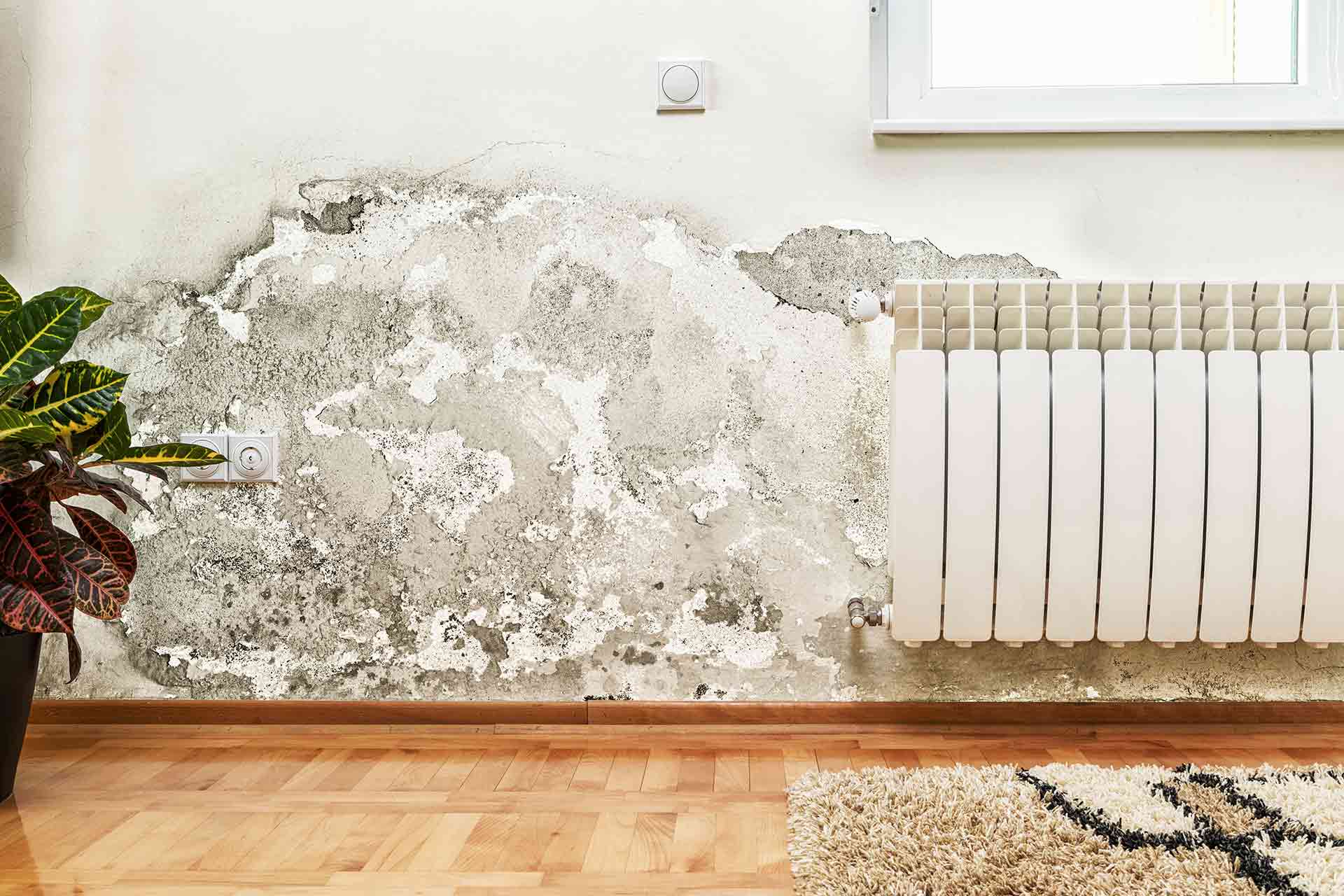
The death of a two year old child has changed landlord obligations in England forever. Awaab's Law, which came into force on 1 October 2025, introduces strict legal timeframes for addressing damp and mould hazards in rented properties. While the law currently applies to social housing, its extension to private landlords is already written into the Renters' Rights Act 2025 and expected to take effect by 2030.
For London landlords managing properties across the capital, understanding these new requirements is not optional. The combination of ageing housing stock, high tenant density, and increasing regulatory scrutiny makes London a particular focus for enforcement. Whether you manage a Victorian terrace in Islington, a converted flat in Lewisham, or a purpose built block in Tower Hamlets, the legal landscape around damp and mould has fundamentally shifted.
This comprehensive guide explains everything London landlords need to know about Awaab's Law, including what the legislation requires, how it affects your properties, what penalties apply for non compliance, and most importantly, how to prepare your portfolio before these obligations extend to the private sector.
Table of Contents
- The Tragic Background: Who Was Awaab Ishak?
- What Is Awaab's Law and What Does It Require?
- The Legal Timeframes Explained
- Who Does Awaab's Law Currently Apply To?
- When Will Private Landlords Be Affected?
- How London Properties Are Particularly Vulnerable
- The End of the "Lifestyle" Defence
- Penalties and Consequences for Non Compliance
- What Landlords Should Do Now to Prepare
- The Role of Professional Damp Surveys
- FAQs
- Conclusion
1. The Tragic Background: Who Was Awaab Ishak?
Understanding why this legislation exists helps landlords appreciate its significance and the seriousness with which regulators and courts will approach enforcement. Awaab's Law is not an abstract regulatory exercise. It emerged from a preventable tragedy that shocked the nation and exposed systemic failures in how landlords respond to damp and mould complaints.
Awaab Ishak was a two year old boy who died on 21 December 2020 at his family's flat in Rochdale, Greater Manchester. The cause of death, confirmed by a coroner's inquest in November 2022, was a severe respiratory condition caused by prolonged exposure to mould in his home. The coroner found that Awaab died as a direct result of the mould in the one bedroom flat where he lived with his parents, and that his death was entirely preventable.
The family had lived in the property, managed by Rochdale Boroughwide Housing, since 2017. They reported the mould repeatedly over several years. Despite multiple complaints and clear visible evidence of extensive mould growth throughout the flat, the housing association failed to address the underlying cause. Instead, responses focused on superficial treatments and, critically, suggestions that the family's "lifestyle" was responsible for the condensation and mould. The family was advised to improve ventilation and change their cooking and bathing habits, rather than the landlord investigating and fixing the structural causes of the problem.
The inquest revealed that despite being fully aware of the mould problem, the housing association took no effective action over a period of years. Expert evidence confirmed that the mould was caused by inadequate ventilation and poor property conditions, not tenant behaviour. The coroner issued a damning verdict and a Prevention of Future Deaths report, calling for urgent action to prevent similar tragedies.
The public and political response was immediate and powerful. Awaab's case became a national scandal, prompting the government to introduce what became known as Awaab's Law as an amendment to the Social Housing (Regulation) Act 2023. The legislation passed with cross party support, reflecting widespread agreement that the housing sector's approach to damp and mould required fundamental reform.
The tragedy exposed several critical failures that the new law seeks to address. First, there was no legal requirement for landlords to act within specific timeframes, allowing complaints to drag on indefinitely. Second, the "lifestyle" defence allowed landlords to deflect responsibility onto tenants without proper investigation. Third, enforcement mechanisms were weak and rarely used, leaving tenants with limited options when landlords failed to act. Fourth, there was no standardised approach to assessing and responding to damp and mould hazards.
Awaab's Law directly addresses each of these failures by establishing clear timeframes, removing the lifestyle e
xcuse, strengthening enforcement, and creating standardised requirements for hazard response. For landlords, the message is unambiguous: damp and mould must be taken seriously, investigated properly, and resolved promptly. The alternative is legal liability, financial penalties, and the moral weight of potentially causing serious harm to tenants.
2. What Is Awaab's Law and What Does It Require?
Awaab's Law is the informal name for requirements introduced through the Social Housing (Regulation) Act 2023 and subsequent regulations that came into force on 1 October 2025. The law establishes legally binding timeframes within which social landlords must investigate, report on, and begin repairs for damp and mould hazards in their properties.
The core principle underlying the legislation is that tenants have a right to live in homes free from hazards that could harm their health, and that landlords have a corresponding duty to address such hazards promptly when they are reported or identified. The law moves away from the previous approach where landlords could effectively ignore or delay addressing damp problems indefinitely, and creates enforceable obligations with real consequences for failure.
The legislation operates by categorising damp and mould hazards according to their severity and then prescribing specific timeframes for landlord action based on that categorisation. This tiered approach recognises that some hazards require immediate emergency response while others can be addressed through normal repair processes, but ensures that all hazards receive attention within defined periods.
The key requirements established by Awaab's Law include mandatory investigation of all reported damp and mould issues within 14 calendar days of the landlord becoming aware of the problem. This investigation must determine the cause of the damp, assess the severity of the hazard, and establish what repairs are required. The 14 day clock starts from whenever the landlord first learns of the issue, whether through tenant report, property inspection, or any other means.
Following investigation, landlords must provide tenants with a written summary of their findings within 7 calendar days of completing the investigation. This summary must explain what the landlord found during the investigation, what they have identified as the cause of the damp or mould, what repairs are required, and the timeframe within which those repairs will be completed. The written summary requirement ensures transparency and creates a documented record of the landlord's response.
For significant hazards, meaning those that pose a material risk to the health or safety of occupants, repairs must begin within 7 calendar days of the written summary being provided. This does not mean all repairs must be completed within 7 days, but that work must commence within this timeframe. Complex repairs may take longer to complete, but the landlord must demonstrate that they have started the remediation process.
For emergency hazards, meaning those that pose an imminent risk of serious harm, the timeframes are dramatically compressed. Landlords must begin action to make the property safe within 24 hours of becoming aware of the emergency hazard. This might involve emergency repairs, temporary measures to reduce the hazard, or in extreme cases, moving tenants to alternative accommodation while repairs are carried out.
The legislation also establishes requirements for what happens when repairs cannot be completed quickly. If a landlord cannot make a property safe within the prescribed timeframes, they must offer the tenant suitable alternative accommodation. This prevents landlords from leaving tenants in hazardous conditions simply because repairs are complex or expensive.
3. The Legal Timeframes Explained
Understanding the specific timeframes is essential for compliance. The law establishes different requirements depending on the nature and severity of the hazard, and landlords must be able to accurately categorise issues to respond appropriately.
The 14 Day Investigation Requirement
When a landlord becomes aware of a potential damp or mould hazard, they have 14 calendar days to complete an investigation. This period begins from the date the landlord first learns of the issue, regardless of how that information reaches them. A tenant complaint, a contractor observation during unrelated work, a property inspection finding, or any other source of information all trigger the same 14 day obligation.
The investigation must be substantive, not merely a brief visual inspection. Landlords are expected to determine the type of damp present (rising, penetrating, or condensation), identify the underlying cause, assess the extent and severity of the problem, and establish what remedial work is required. For complex cases, this may require specialist assessment including moisture surveys, thermal imaging, or other diagnostic techniques.
The 14 day period is a maximum, not a target. Landlords should complete investigations as quickly as reasonably possible, particularly where tenants or their families include vulnerable individuals such as young children, elderly people, or those with respiratory conditions. The presence of vulnerable occupants is a factor in determining whether a hazard should be classified as emergency or significant.
The 7 Day Written Summary Requirement
Within 7 calendar days of completing the investigation, the landlord must provide the tenant with a written summary. This document must clearly explain the findings of the investigation, the identified cause of the damp or mould, the classification of the hazard (emergency, significant, or non urgent), the repairs required to resolve the problem, and the timeframe within which repairs will be completed.
The written summary serves multiple purposes. It ensures tenants understand what is happening with their complaint and what they can expect. It creates a documented record that can be used in any subsequent dispute or enforcement action. It forces landlords to commit to specific actions and timeframes, creating accountability. It also provides a basis for tenants to challenge inadequate responses or escalate to regulatory bodies if necessary.
The 7 Day Repair Commencement for Significant Hazards
Significant hazards are those that pose a material risk to health or safety but are not immediately life threatening. Most damp and mould problems that have been present for some time fall into this category. For significant hazards, repairs must begin within 7 calendar days of the written summary being issued.
"Beginning repairs" means taking substantive action to address the problem, not merely scheduling work for a future date. This might include starting remedial work, ordering necessary materials, or commissioning specialist contractors. The key is that tangible progress toward resolution must be underway within the 7 day window.
Completion timeframes for significant hazards depend on the complexity of the required work. Simple repairs might be completed within days. More complex remediation, such as installing new ventilation systems or addressing structural damp issues, may take weeks or months. The legislation does not prescribe specific completion timeframes for significant hazards, but landlords must complete work within reasonable periods and keep tenants informed of progress.
The 24 Hour Emergency Response Requirement
Emergency hazards are those that pose an imminent and significant risk of serious harm. In the context of damp and mould, this typically means severe mould affecting properties where vulnerable people live, particularly young children, elderly tenants, or those with existing respiratory conditions. It can also include situations where structural integrity is compromised or where there is active water ingress creating electrical hazards.
For emergency hazards, landlords must begin action to make the property safe within 24 hours. This is a demanding requirement that may necessitate out of hours response capabilities. Actions might include emergency repairs, installation of temporary safety measures, provision of dehumidifiers or air purifiers, or relocation of tenants to temporary accommodation.
The 24 hour requirement applies from the moment the landlord becomes aware of the emergency nature of the hazard. If a tenant reports mould and mentions that their young child has been hospitalised with respiratory problems, the emergency clock starts immediately upon receiving that information.
Alternative Accommodation Requirements
Where a hazard cannot be made safe within the prescribed timeframes, landlords must offer tenants suitable alternative accommodation. This obligation ensures that tenants are not left living in hazardous conditions simply because repairs are complex or take time to complete.
Alternative accommodation must be suitable for the tenant's needs, taking into account factors such as household size, accessibility requirements, proximity to schools or workplaces, and any other relevant circumstances. Landlords bear the cost of providing alternative accommodation and cannot charge tenants for this provision.
4. Who Does Awaab's Law Currently Apply To?
As of October 2025, Awaab's Law applies to registered providers of social housing in England. This includes local authority landlords (council housing) and private registered providers such as housing associations. The legislation covers all properties owned or managed by these organisations, whether the tenancy is secure, assured, or introductory.
The scope of coverage is substantial. Social housing accounts for approximately 17% of all housing in England, representing around 4 million homes. In London, social housing represents a significant proportion of the rental market, with many boroughs having large council and housing association estates. Major London housing providers including Peabody, L&Q, Notting Hill Genesis, and all 32 London borough councils are subject to these requirements.
For private landlords, including individual buy to let investors, property companies, and private letting agents, Awaab's Law does not currently create direct legal obligations. However, this exemption is explicitly temporary. The Renters' Rights Act 2025, which received Royal Assent on 27 October 2025, contains provisions extending Awaab's Law to the private rented sector.
The current focus on social housing reflects both practical and political considerations. Social landlords are regulated bodies with established compliance structures, making implementation more straightforward. The social housing sector was also the focus of public concern following Awaab's death, creating political momentum for immediate action. Additionally, the government's approach of phased implementation allows the private sector to observe and prepare before its own obligations commence.
Private landlords should not interpret the current exemption as permission to ignore damp and mould. Existing legislation, including the Landlord and Tenant Act 1985, the Homes (Fitness for Human Habitation) Act 2018, and the Housing Health and Safety Rating System, already creates obligations to address damp and mould hazards. The difference is that these existing obligations do not include specific timeframes and are enforced differently.
Moreover, the extension to private landlords is not speculative or distant. It is written into law and the government has committed to implementation. Private landlords have a window of time to prepare their properties and processes, but that window is closing.
5. When Will Private Landlords Be Affected?
The extension of Awaab's Law to private landlords is contained within the Renters' Rights Act 2025, which became law on 27 October 2025. The Act provides the legal framework for applying the same timeframe requirements to private rented properties that currently apply to social housing.
The government's implementation plan for the Renters' Rights Act involves three phases. Phase 1, which takes effect on 1 May 2026, includes the abolition of Section 21 evictions and the transition to periodic tenancies. Phase 2, expected during 2026 to 2028, involves the rollout of the Private Rented Sector Database and the establishment of a Private Rented Sector Ombudsman. Phase 3, targeted for 2030 onwards, includes the application of the Decent Homes Standard to private rentals and the extension of Awaab's Law to private landlords.
The 2030 target date for Awaab's Law extension is not fixed in statute and could potentially be brought forward. Political pressure, further tenant deaths, or operational readiness could all influence the timing. Private landlords should plan on the assumption that the requirements will apply by 2030 at the latest, while recognising that earlier implementation is possible.
When the extension takes effect, private landlords will be subject to the same timeframe requirements currently applying to social landlords. This means 14 days to investigate reported hazards, 7 days to provide written summaries, 7 days to commence repairs for significant hazards, and 24 hours to respond to emergency hazards. The penalty regime will also extend, creating equivalent consequences for non compliance.
The practical implications for private landlords are significant. Many private landlords operate without the support infrastructure available to housing associations and councils. Individual landlords managing one or two properties may lack the systems, knowledge, and contractor relationships needed to meet demanding timeframes. Letting agents will face pressure to develop processes ensuring compliance across their managed portfolios.
The window between now and 2030 provides an opportunity for preparation. Landlords who use this time to assess their properties, address existing damp issues, establish responsive maintenance processes, and develop relationships with qualified surveyors and contractors will be well positioned when the requirements extend. Those who ignore the coming changes will face a difficult adjustment when compliance becomes mandatory.
6. How London Properties Are Particularly Vulnerable
London's housing stock presents particular challenges for damp and mould management. The combination of property age, construction methods, population density, and climate creates conditions that make damp problems both more likely and more difficult to resolve. Landlords operating in London need to understand these vulnerabilities and take proactive steps to address them.
The Prevalence of Victorian and Edwardian Properties
A significant proportion of London's housing was built during the Victorian and Edwardian eras, roughly 1837 to 1914. These properties were constructed using methods and materials that differ fundamentally from modern building practice. Solid brick walls without cavity insulation are the norm in properties of this age. These walls absorb moisture when it rains and release it through evaporation when dry, a system that works well when the original breathable materials remain intact but fails when modern impermeable materials are introduced.
Many older London properties have been modified over the decades in ways that compromise their original moisture management. Cement pointing replacing lime mortar, gypsum plaster over lime, impermeable masonry paint, and sealed double glazing all interfere with the breathability that Victorian builders relied upon. The result is moisture becoming trapped within the building fabric, leading to damp problems that can be difficult to diagnose and resolve.
Original damp proof courses in Victorian properties, typically made from slate or bitumen, frequently fail or become bridged over time. Ground levels rise as gardens are landscaped and paths resurfaced, allowing moisture to bypass the DPC and rise up the wall. Chemical DPC injection, while sometimes effective, is also frequently misapplied to problems that have other causes.
Converted Flats and Complex Building Arrangements
London has a high proportion of properties that have been converted from single family homes into multiple flats. These conversions often create complex building arrangements where responsibility for different elements is split between multiple parties. The freeholder may be responsible for the roof and external walls, individual leaseholders for their own flats, and managing agents for communal areas. When damp problems arise, disputes about responsibility can delay remediation while tenants suffer.
Converted properties also frequently have compromised ventilation. Original chimney flues may be capped without replacement ventilation. Rooms subdivided during conversion may have inadequate windows or extract facilities. Bathrooms and kitchens created in spaces not originally designed for them may lack proper moisture extraction. These ventilation deficiencies contribute to condensation problems that can be difficult to resolve without significant building work.
Basement and Lower Ground Floor Properties
Basement and lower ground floor flats are common in London, particularly in areas like Kensington, Hammersmith, Camden, and Islington where Victorian townhouses have been converted. These below ground spaces are inherently more vulnerable to damp. They sit in contact with the ground on multiple surfaces, receive less natural light and ventilation, and often have inadequate original waterproofing.
London's clay soil expands and contracts with moisture levels, placing stress on basement structures and potentially opening pathways for water ingress. High water tables in some areas add groundwater pressure. Even properties with tanked basements can develop leaks over time as waterproofing systems age and building movement creates cracks.
Tenants living in basement properties often report persistent damp problems that prove difficult to resolve. The underlying causes may require significant structural intervention such as new tanking systems, French drains, or sump pumps. These are expensive works that some landlords are reluctant to undertake, leading to ongoing damp problems and potential Awaab's Law violations.
Population Density and Moisture Generation
London properties typically accommodate higher occupancy levels than equivalent homes elsewhere in the country. Higher rents and smaller average property sizes push more people into less space. This increased occupancy generates more moisture through cooking, bathing, breathing, and other normal activities.
Properties with adequate ventilation can cope with this moisture load, but many London rentals, particularly older converted properties, lack sufficient ventilation for their actual occupancy. The result is elevated humidity levels that lead to condensation, mould growth, and tenant complaints. Landlords may find themselves facing repeated damp issues in properties that simply cannot handle the moisture generated by their occupants without significant ventilation improvements.
7. The End of the "Lifestyle" Defence
One of the most significant aspects of Awaab's Law is its effective elimination of the so called "lifestyle" defence. For years, landlords facing damp and mould complaints have deflected responsibility by blaming tenant behaviour. Claims that tenants caused condensation through inadequate heating, excessive moisture generation, insufficient ventilation, or other lifestyle factors have been used to avoid undertaking repairs. Awaab's Law makes this approach legally and practically untenable.
The Housing Ombudsman's landmark report on damp and mould, published in October 2021 following extensive investigation into social landlord practices, explicitly stated that it was "not acceptable" for landlords to blame tenants for damp and mould without proper investigation. The report found that lifestyle explanations were often applied without evidence, used to avoid responsibility, and caused significant harm to tenants who were left living in hazardous conditions while being told the problem was their fault.
Awaab's Law codifies this position by requiring proper investigation before any response. The 14 day investigation requirement means landlords cannot simply dismiss complaints with lifestyle advice. They must actively assess the property, determine the cause of the damp, and take appropriate action. If the cause genuinely is tenant behaviour in a property with adequate ventilation and heating, that will be established through investigation. But landlords can no longer assume lifestyle causation without evidence.
The legislation also recognises that even where tenant behaviour contributes to condensation, the landlord may still have obligations. If a property lacks adequate ventilation for its occupancy, the landlord cannot simply blame tenants for generating moisture through normal living activities. Properties must be fit for habitation, which includes being capable of managing the moisture loads generated by typical occupancy.
For London landlords, this shift has practical implications. Many older properties have ventilation systems designed for Victorian households with open fires, drafty windows, and fewer occupants. These ventilation provisions may be inadequate for modern lifestyles with sealed double glazing, blocked chimneys, and higher occupancy. Landlords cannot expect tenants to compensate for building deficiencies through behaviour modification.
The appropriate response when condensation occurs in a property is to assess the adequacy of ventilation, heating, and insulation for the property's actual use. If these are inadequate, improvements should be made. Installing extractor fans, providing trickle vents, improving insulation, and ensuring heating systems are functional and affordable to run are all landlord responsibilities. Only where the property genuinely provides adequate facilities and the tenant is not using them appropriately can behaviour be legitimately identified as a factor.
Even then, landlords have a duty to educate and support tenants, not simply blame them. Providing clear guidance on property use, ensuring tenants understand how ventilation systems work, and offering practical support for moisture management are all reasonable expectations. Simply sending a letter about lifestyle and closing the complaint is no longer acceptable practice.
8. Penalties and Consequences for Non Compliance
Awaab's Law creates meaningful consequences for landlords who fail to meet their obligations. The enforcement framework combines regulatory action, compensation orders, and reputational damage to create strong incentives for compliance.
Regulatory Enforcement
Social landlords are regulated by the Regulator of Social Housing, which has powers to intervene where providers fail to meet required standards. The regulator can issue compliance notices requiring specific actions, impose financial penalties, and in extreme cases remove providers from the register, preventing them from operating as social landlords.
The regulator's consumer standards, updated to reflect Awaab's Law requirements, make clear that meeting the prescribed timeframes is a regulatory expectation. Systematic failures to comply will result in regulatory action, with consequences escalating based on the severity and persistence of failures.
For private landlords when the extension takes effect, enforcement will primarily fall to local authority environmental health teams. Councils have existing powers under the Housing Act 2004 to take action against hazards identified through HHSRS assessments. Awaab's Law will provide additional grounds for enforcement where landlords fail to meet timeframe requirements.
Financial Penalties
Landlords who fail to comply with Awaab's Law requirements face financial penalties that can be substantial. Local authorities can impose civil penalties of up to £30,000 per offence as an alternative to prosecution. For serious or repeated failures, prosecution through the courts can result in unlimited fines.
The financial exposure extends beyond regulatory penalties. Tenants affected by landlord failures can pursue compensation through the courts or, for social housing, through the Housing Ombudsman. Compensation awards for damp and mould cases have increased significantly in recent years, with some awards exceeding £30,000 for severe cases involving prolonged exposure and health impacts.
Rent repayment orders provide another avenue for tenant recovery. Where a landlord has committed certain housing offences, tenants can apply for orders requiring repayment of up to 24 months' rent under provisions strengthened by the Renters' Rights Act 2025. The combination of penalties, compensation, and rent repayment can make non compliance extremely expensive.
Ombudsman Determinations
For social housing, the Housing Ombudsman provides a route for tenants to challenge inadequate landlord responses. The ombudsman can order landlords to pay compensation, undertake specific works, and change their policies or practices. Ombudsman determinations are published, creating reputational consequences alongside financial ones.
Recent ombudsman cases have resulted in substantial awards. In 2024, Lewisham Council was ordered to pay nearly £40,000 across three cases involving tenants who endured years of damp and mould. Individual awards in severe cases have exceeded £30,000. The ombudsman has also issued severe maladministration findings against landlords who delayed responses, blamed tenant lifestyle without evidence, or failed to address root causes.
When the Private Rented Sector Ombudsman is established under the Renters' Rights Act 2025, private tenants will have similar recourse. All private landlords will be required to join the ombudsman scheme, and tenants will be able to escalate unresolved complaints without needing to go to court.
Reputational and Operational Consequences
Beyond direct financial penalties, non compliance creates reputational damage that can affect landlord operations. Social landlords face public scrutiny through ombudsman publication of determinations, media coverage of failings, and regulatory intervention notices. This reputational damage can affect staff morale, recruitment, tenant relations, and political support.
For private landlords, the forthcoming Private Rented Sector Database will include information about enforcement action taken against landlords. Prospective tenants will be able to check landlord records before renting, creating market consequences for those with poor compliance histories.
9. What Landlords Should Do Now to Prepare
Whether you are a social landlord already subject to Awaab's Law or a private landlord preparing for its extension, proactive preparation is essential. The following steps will help ensure compliance and, more importantly, ensure your tenants live in safe, healthy homes.
Audit Your Portfolio for Existing Damp Issues
Begin with a systematic assessment of all properties in your portfolio. Don't wait for tenant complaints. Proactively inspect for signs of damp and mould, particularly in properties with risk factors such as Victorian construction, basement or ground floor locations, poor ventilation, or previous damp history.
For each property, check external walls for signs of penetrating damp, especially where pointing is deteriorating or render is cracked. Examine ground levels relative to damp proof courses. Test that airbricks are clear and providing subfloor ventilation. Check that extractor fans are functional and actually being used. Look for condensation on windows and mould in corners, around windows, and behind furniture.
Document what you find and prioritise issues for remediation. Properties with existing damp problems should be addressed now, before tenant complaints or regulatory attention force reactive responses under time pressure.
Establish Responsive Reporting and Investigation Systems
Create clear processes for tenants to report damp and mould concerns, and ensure these reports trigger investigation within the required timeframes. Every complaint should be logged with the date received, starting the 14 day investigation clock.
Develop investigation protocols that ensure substantive assessment of reported issues. Simple visual inspection by non specialist staff is unlikely to satisfy the investigation requirement for anything beyond the most straightforward cases. Consider what level of investigation is appropriate for different property types and complaint presentations, and ensure access to specialist survey capability for complex cases.
Develop Relationships with Qualified Contractors and Surveyors
Meeting the repair commencement timeframes requires having reliable contractors who can respond quickly. Establish relationships with qualified damp specialists, general building contractors, ventilation installers, and other trades you may need. Ensure these relationships include capacity for urgent response when emergency hazards are identified.
For complex cases requiring specialist diagnosis, establish relationships with RICS qualified surveyors who can provide detailed damp assessments. Having a trusted surveyor you can call on for professional investigation will help you meet investigation requirements and ensure accurate diagnosis before remediation.
Create Documentation and Communication Templates
The written summary requirement means you need clear, compliant documentation for every case. Develop templates that capture all required information: investigation findings, identified cause, hazard classification, required repairs, and repair timeframes. Ensure these templates are consistently used and properly stored, creating audit trails that demonstrate compliance.
Communication with tenants should be clear, timely, and documented. From initial acknowledgment of complaints through investigation updates to completion confirmation, maintain records of all tenant communication. These records will be essential if complaints are escalated to the ombudsman or become subject to enforcement action.
Train Staff and Agents
Everyone involved in property management needs to understand Awaab's Law requirements. Property managers, repairs coordinators, call handlers, and any staff receiving tenant communications should know the timeframes, understand what triggers the various clocks, and know how to escalate urgent cases appropriately.
If you use managing agents, ensure they understand their obligations and have appropriate processes in place. The landlord remains legally responsible even where agents manage day to day operations. Clarify in management agreements how Awaab's Law compliance will be achieved and monitored.
Review Insurance Coverage
Check that your landlord insurance provides adequate coverage for damp related claims. As compensation awards increase and enforcement intensifies, insurance becomes increasingly important. Ensure your policy covers legal costs for defending claims, compensation payments where liability is established, and costs of remediation works.
10. The Role of Professional Damp Surveys
Professional damp surveys play a critical role in Awaab's Law compliance, providing the substantive investigation that the legislation requires and the accurate diagnosis that enables effective remediation.
Meeting Investigation Requirements
The 14 day investigation requirement demands more than cursory inspection. For anything beyond straightforward cases, landlords need expert assessment to accurately diagnose damp problems. Professional surveyors bring the knowledge, equipment, and experience needed to distinguish between different damp types, identify root causes, and recommend appropriate remediation.
A proper damp survey includes moisture readings using appropriate meters, thermal imaging to identify cold spots and moisture patterns, visual assessment of both internal and external fabric, and analysis of the building's construction and history. This comprehensive approach ensures accurate diagnosis rather than guesswork.
Avoiding Misdiagnosis and Wasted Expenditure
One of the most common problems in damp remediation is misdiagnosis. Rising damp is frequently diagnosed when the actual cause is condensation, penetrating damp, or DPC bridging. Chemical DPC injection is often applied to problems it cannot solve, wasting money while leaving the actual issue unaddressed.
Professional surveyors provide objective assessment unclouded by commercial interest in particular treatments. A surveyor whose business model depends on selling chemical injection has incentives to diagnose rising damp. An independent surveyor providing diagnostic services has incentives only to be accurate.
Accurate diagnosis enables effective treatment. When you know the actual cause of damp, you can address it directly rather than applying generic treatments that may not work. This means faster resolution, lower costs, and satisfied tenants rather than recurring complaints.
Providing Evidence for Written Summaries
The written summary requirement means landlords must explain to tenants what they found during investigation. A professional survey report provides authoritative content for this communication, demonstrating that proper investigation occurred and supporting the landlord's response.
If a complaint is escalated to the ombudsman or becomes subject to legal action, the survey report provides evidence that the landlord took the issue seriously and investigated properly. This documentation can be crucial in demonstrating compliance and defending against claims of inadequate response.
Supporting Enforcement Defence
Where enforcement action is taken against landlords, the ability to demonstrate compliance is essential. Survey reports, along with other documentation, create an audit trail showing that investigation occurred within required timeframes, was conducted to appropriate standards, and led to properly considered response.
For private landlords preparing for Awaab's Law extension, establishing relationships with qualified surveyors and incorporating professional survey into standard damp response processes will create good practice that provides protection when the requirements apply.
11. FAQs
Does Awaab's Law apply to private landlords now?
No. As of January 2026, Awaab's Law applies only to social housing providers, meaning local authority landlords and registered housing associations. However, the Renters' Rights Act 2025 contains provisions extending the same requirements to private landlords, with implementation expected by 2030. Private landlords should use the intervening period to prepare their properties and processes for compliance. Existing legislation including the Homes (Fitness for Human Habitation) Act 2018 already requires private landlords to address damp and mould, though without the specific timeframes Awaab's Law introduces.
What counts as an emergency hazard requiring 24 hour response?
An emergency hazard is one that poses an imminent and significant risk of serious harm to occupants. In the context of damp and mould, this typically includes severe mould affecting properties where vulnerable people live, particularly young children, elderly tenants, or those with respiratory conditions such as asthma. It can also include situations where water ingress is causing immediate damage or creating electrical hazards. The presence of a child under five in a property with significant mould is likely to be treated as an emergency given the health risks highlighted by Awaab's case. Landlords should err on the side of treating uncertain cases as emergencies rather than risk the consequences of under classification.
Can I still argue that tenant lifestyle caused the damp?
The "lifestyle" defence is effectively dead under Awaab's Law. Landlords cannot dismiss complaints on lifestyle grounds without proper investigation. The 14 day investigation requirement means you must assess the property before reaching any conclusion about causation. If investigation genuinely reveals that the property has adequate ventilation, heating, and insulation, and that tenant behaviour is the primary cause of condensation, you can communicate this with appropriate advice. However, you must also consider whether the property is realistically usable in the way required to prevent condensation. Properties with inadequate ventilation cannot simply shift responsibility to tenants for generating moisture through normal living activities.
What happens if I cannot complete repairs within the timeframes?
The timeframes require commencement of repairs, not completion, for significant hazards. Complex remediation may take weeks or months to complete, and this is acceptable provided work begins within 7 days of the written summary and progresses at a reasonable pace. For emergency hazards, you must make the property safe within 24 hours, which may require temporary measures while permanent repairs are arranged. If a property cannot be made safe within the required timeframes, you must offer the tenant suitable alternative accommodation at your cost. You cannot leave tenants living in hazardous conditions simply because repairs are difficult or expensive.
How should I document compliance?
Documentation should cover every stage of the process. Record when you first became aware of the issue (starting the investigation clock), when investigation was completed and by whom, what the investigation found, when the written summary was provided to the tenant, when repairs commenced and what work was undertaken, and when the issue was fully resolved. Keep copies of all correspondence with tenants, survey reports, contractor quotes and invoices, and photographs documenting the issue and remediation. This documentation provides defence against allegations of non compliance and demonstrates due diligence if complaints are escalated.
What if the tenant caused damage that led to the damp?
Where a tenant has caused damage that leads to damp problems, such as failing to report a leak or deliberately damaging ventilation systems, the landlord is not required to remedy issues caused by tenant action. However, you must still investigate reported issues and cannot simply assume tenant causation without evidence. If investigation reveals tenant caused damage, document this clearly and communicate with the tenant about their responsibilities. Be aware that landlords have limited ability to charge tenants for repairs, and that pursuing tenants for damage costs can be difficult in practice.
Do I need to use a professional surveyor for every damp complaint?
Not necessarily for every complaint, but for anything beyond straightforward cases. If condensation is clearly limited to bathroom windows in a well ventilated flat and responds to improved tenant use of extractor fans, professional survey may not be needed. But if the cause is unclear, if the problem is significant, if it recurs after attempted remediation, or if the property has complex features such as solid walls or basement areas, professional survey is advisable. The investigation must be substantive enough to accurately identify the cause and appropriate remediation. For complex cases, this requires professional expertise.
12. Conclusion
Awaab's Law represents the most significant change to landlord obligations around damp and mould in a generation. The legislation creates clear, enforceable timeframes for investigation and response, eliminates the discredited lifestyle defence, and establishes meaningful consequences for non compliance. While currently applying only to social housing, the extension to private landlords is written into law and coming within the next few years.
For London landlords, the combination of ageing housing stock, complex building arrangements, and high population density creates particular challenges. Victorian properties with solid walls, converted flats with compromised ventilation, and basement dwellings with inherent damp vulnerability all require careful management. The days of dismissing tenant complaints or allowing issues to drift unresolved are over.
The practical requirements are demanding. Fourteen days to investigate. Seven days to provide written findings. Seven days to commence repairs for significant hazards. Twenty four hours to respond to emergencies. Meeting these timeframes requires systems, relationships, and processes that many landlords currently lack. Building these capabilities now, before requirements extend to the private sector, positions landlords for compliance and protects tenants from harm.
The underlying principle is simple: tenants have a right to live in homes that do not damage their health. Awaab Ishak's death demonstrated the tragic consequences when landlords fail to take damp and mould seriously. The legislation bearing his name ensures that similar failures will face legal consequences.
Henderson Wood provides RICS compliant damp surveys across all London boroughs, supporting landlords in meeting their investigation obligations and ensuring accurate diagnosis of damp problems. Our detailed reports identify the type and cause of damp, assess severity, and recommend appropriate remediation, providing the substantive investigation that Awaab's Law requires and the documentation that demonstrates compliance.
Whether you are a social landlord already subject to these requirements or a private landlord preparing for their extension, professional damp survey capability is essential. Contact us to discuss how we can support your compliance and, more importantly, help you provide safe, healthy homes for your tenants.